How do we make kin with a landscape that sustains life — but also feels threatening?
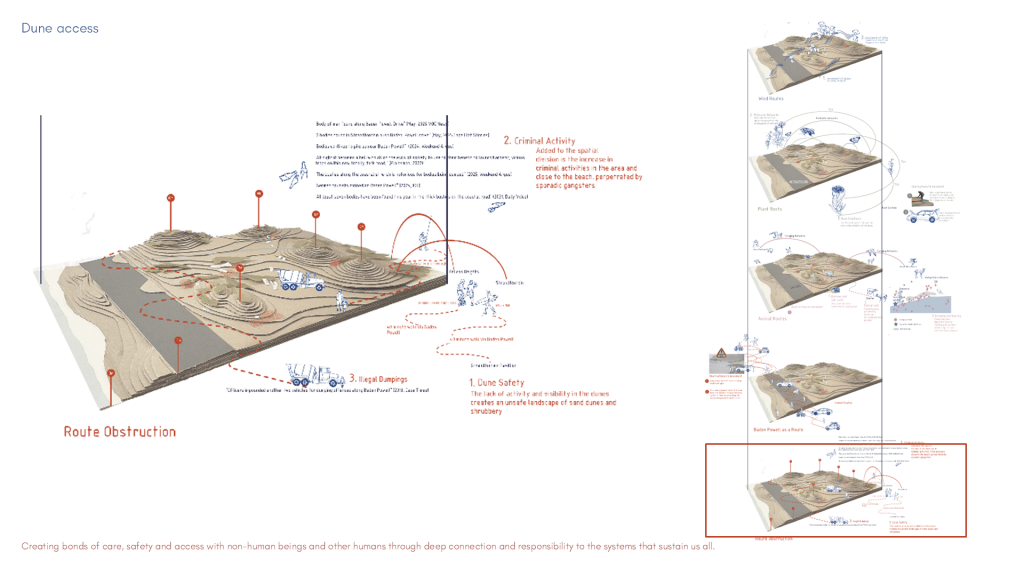
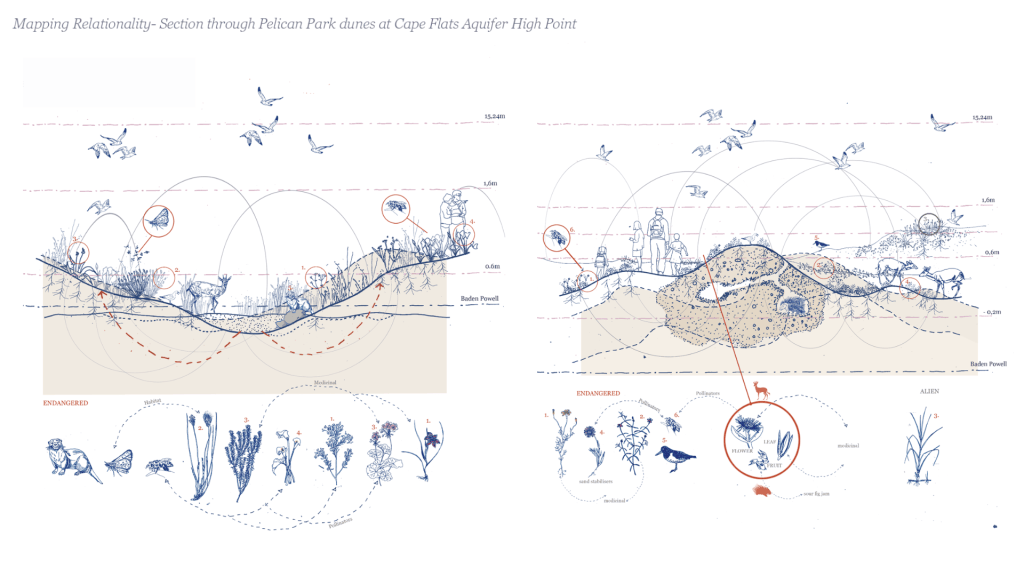
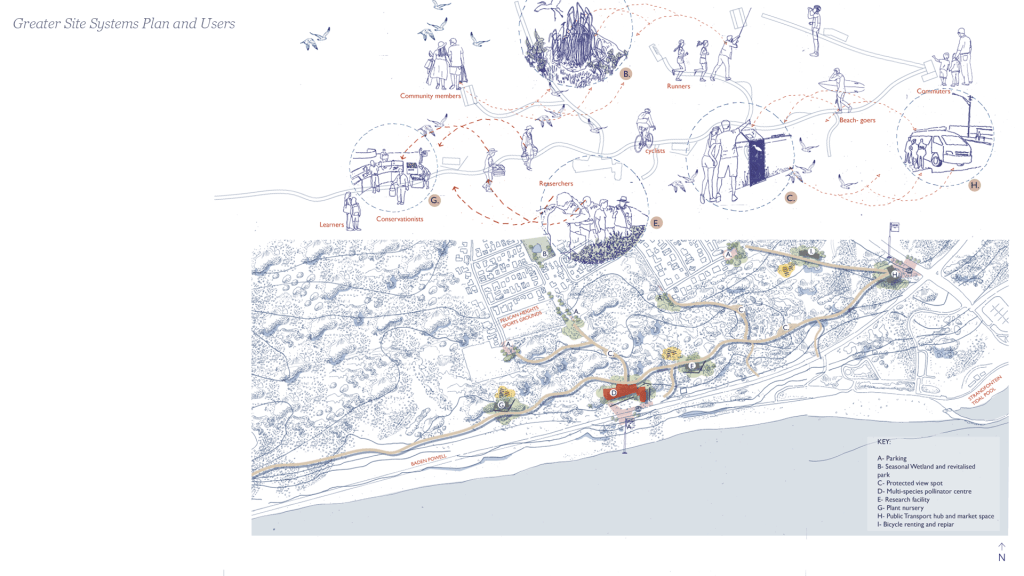
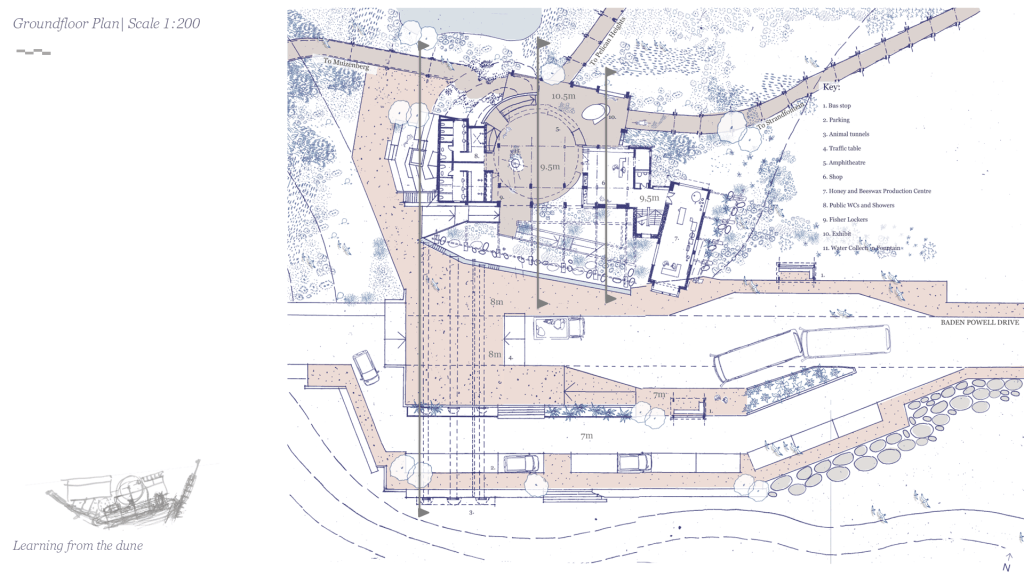
Along Baden Powell Drive, high dunes offer shelter to endangered species while creating the very blind spots that make people feel unsafe. Car-dominated infrastructure and a no-man’s-land of sand cut neighbourhoods off from a coastline less than a kilometre away — disrupting ecological flows in the same movement that it severs community from place.
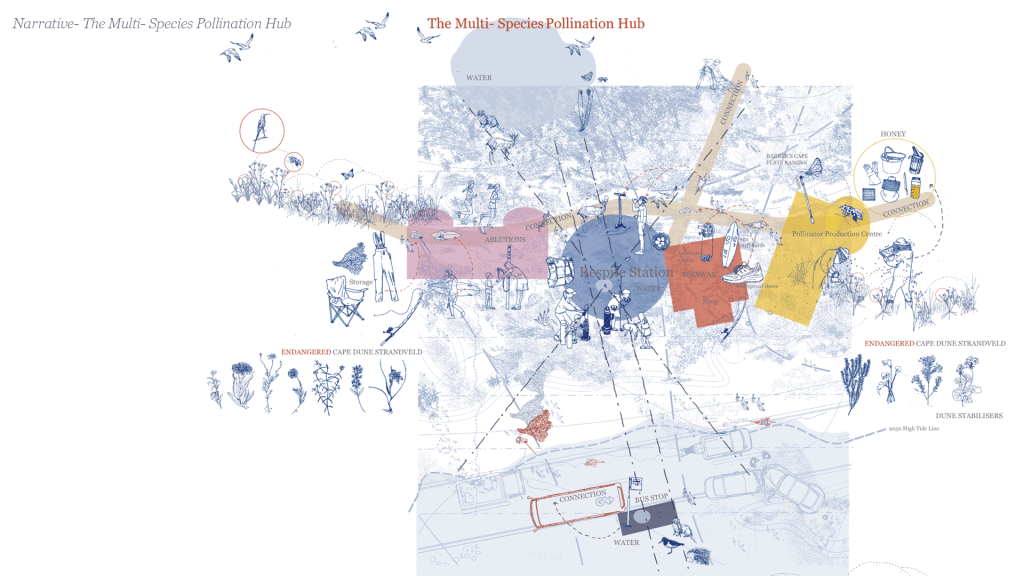
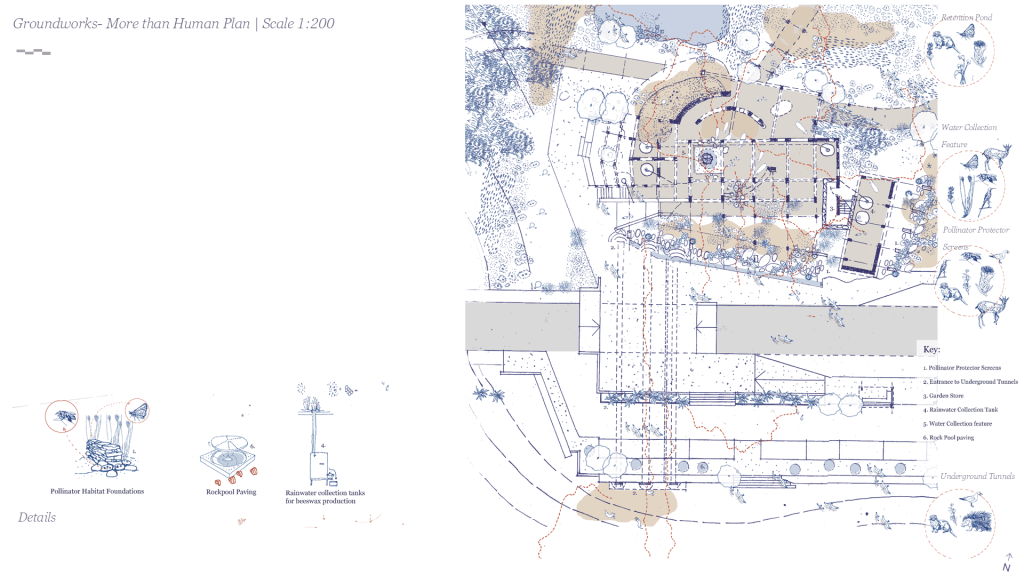
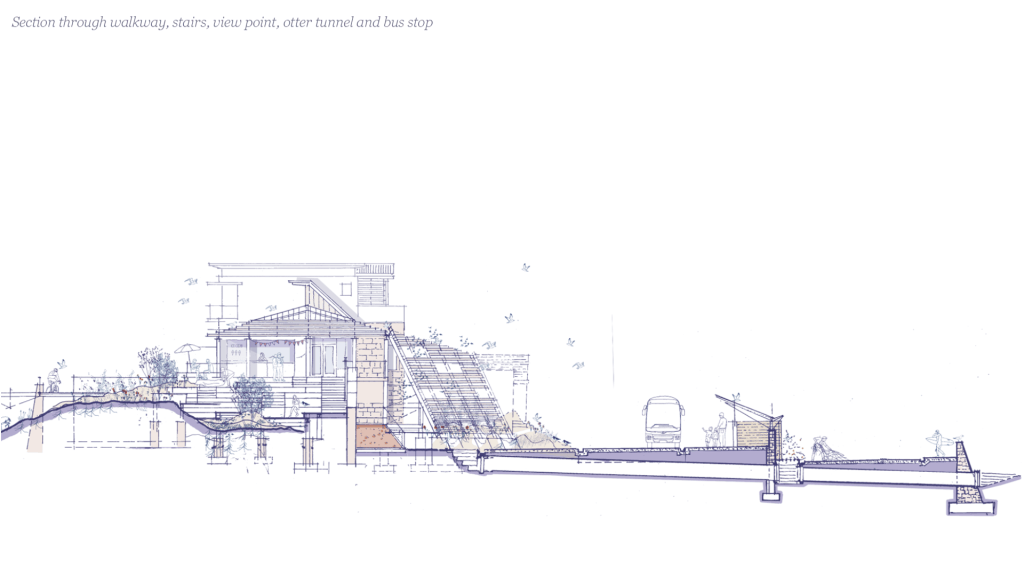
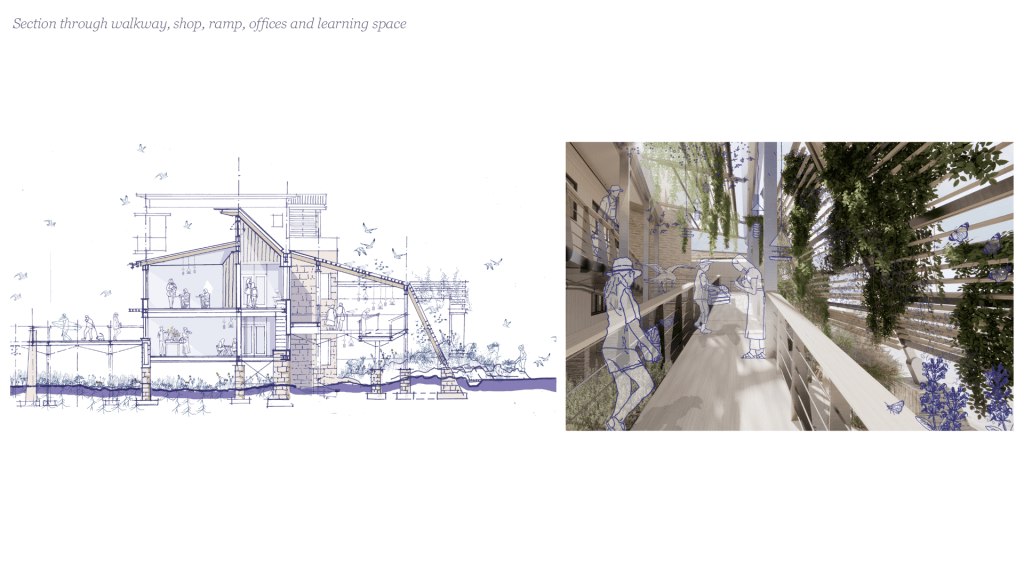
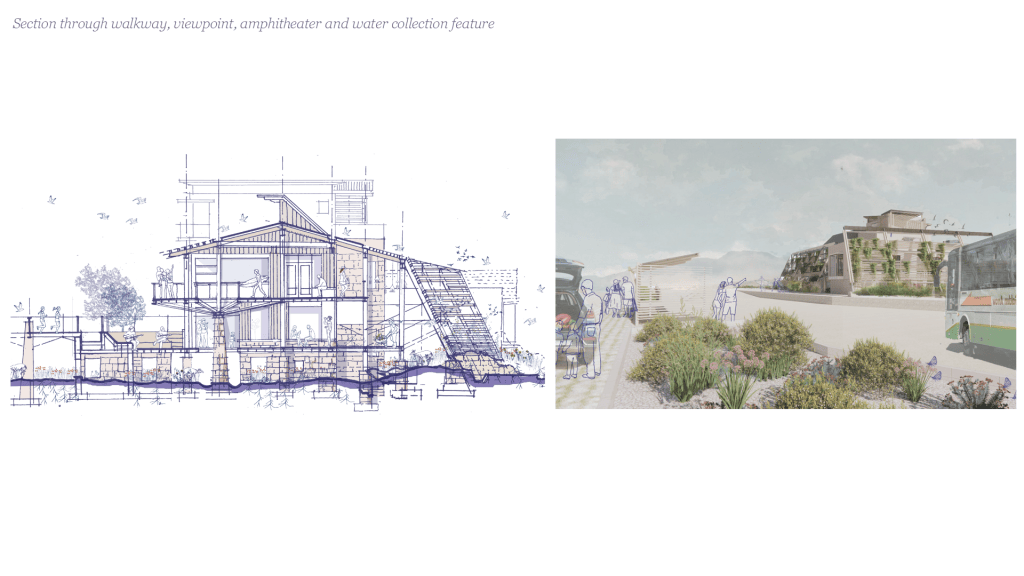
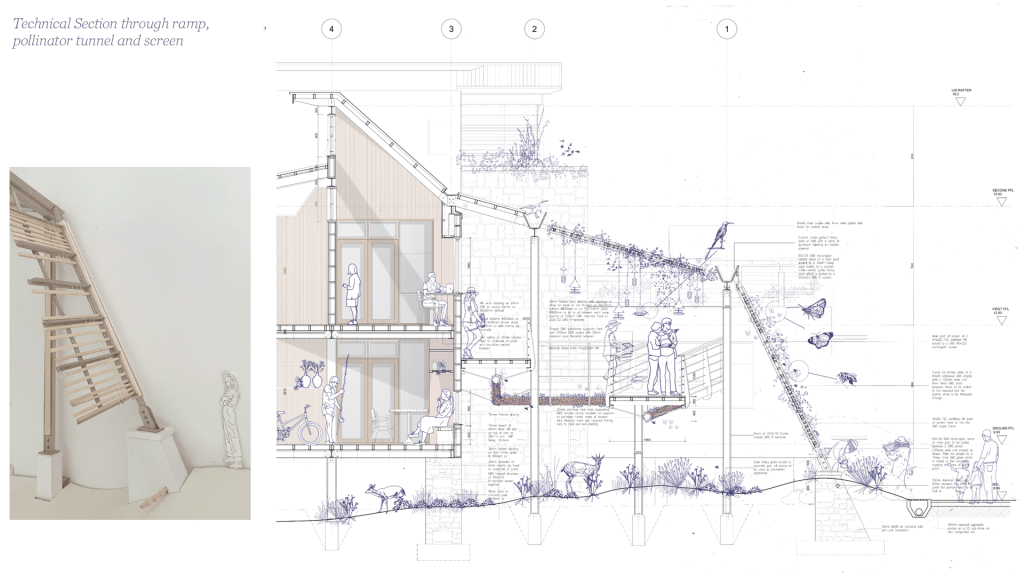
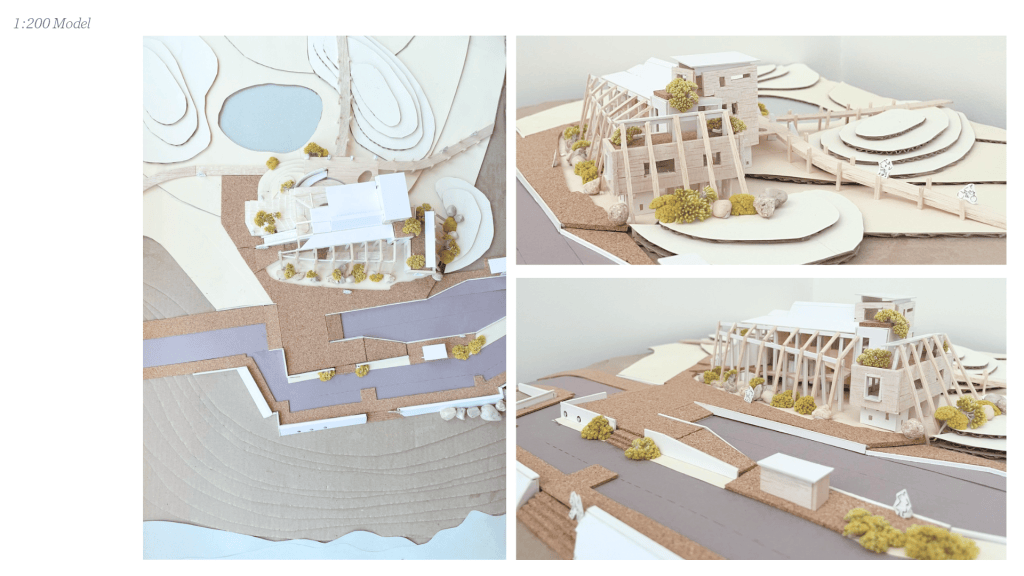
This project understands repair as relational: not a singular fix, but an ongoing act of coexistence. It proposes a multispecies pollination hub that reconnects community to coast through raised walkways, integrated bus stops, and a shared building organised around water, care, and visibility.
The design centres its attention on pollinators — bees, and the critically endangered Barber’s Cape Flats Ranger butterfly, of which fewer than fifty individuals remain. This butterfly pollinates the endangered strandveld vegetation that stabilises the dunes against rising seas, making its survival inseparable from the coastline’s own capacity to hold.
Rather than separating conservation from community, the project challenges exclusionary models of care. Activity and presence create safety here; visibility becomes protection, not surveillance. Fishermen, runners, cyclists, locals, and conservationists share the same space. Beekeeping, research, nurseries, and ecological maintenance become the work of repair — healing the relationships between people and the landscapes that sustain them.
Architecture that cares. Architecture that connects. Coexistence, one pollinator at a time.
 repairative architectures