What would it mean for architecture to move with labour — and with the tide?
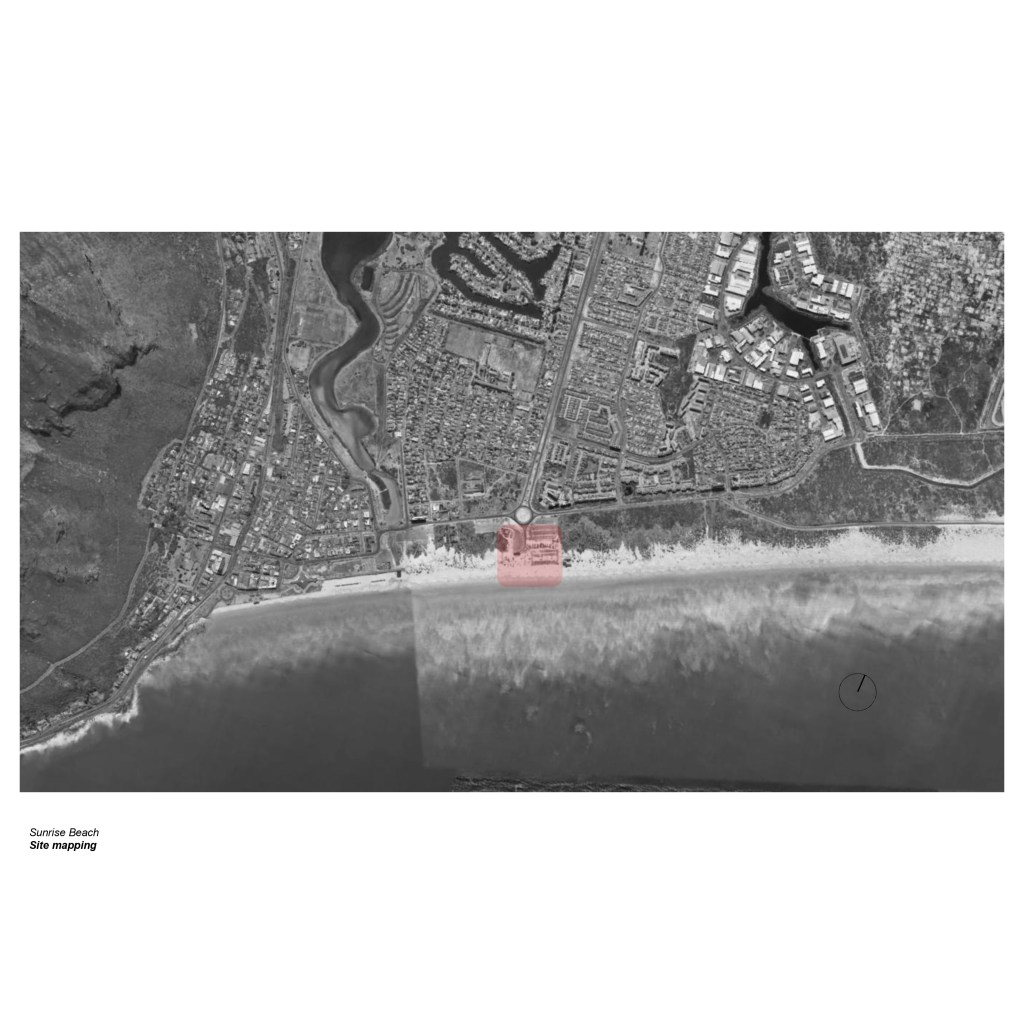
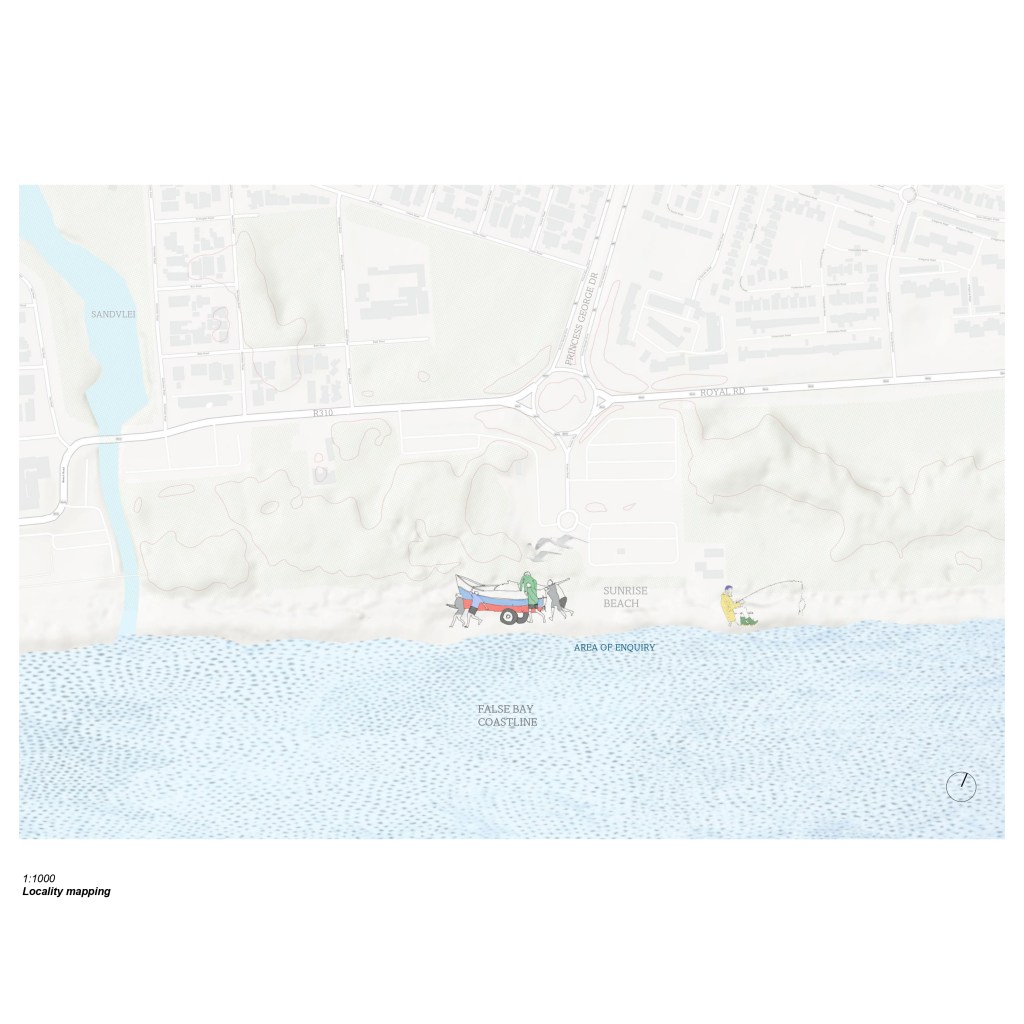
Sited along the False Bay coastline between Muizenberg and Strandfontein Pavilion, this project responds to the spatial and regulatory pressures shaping trek net fishing at Sunrise Beach.
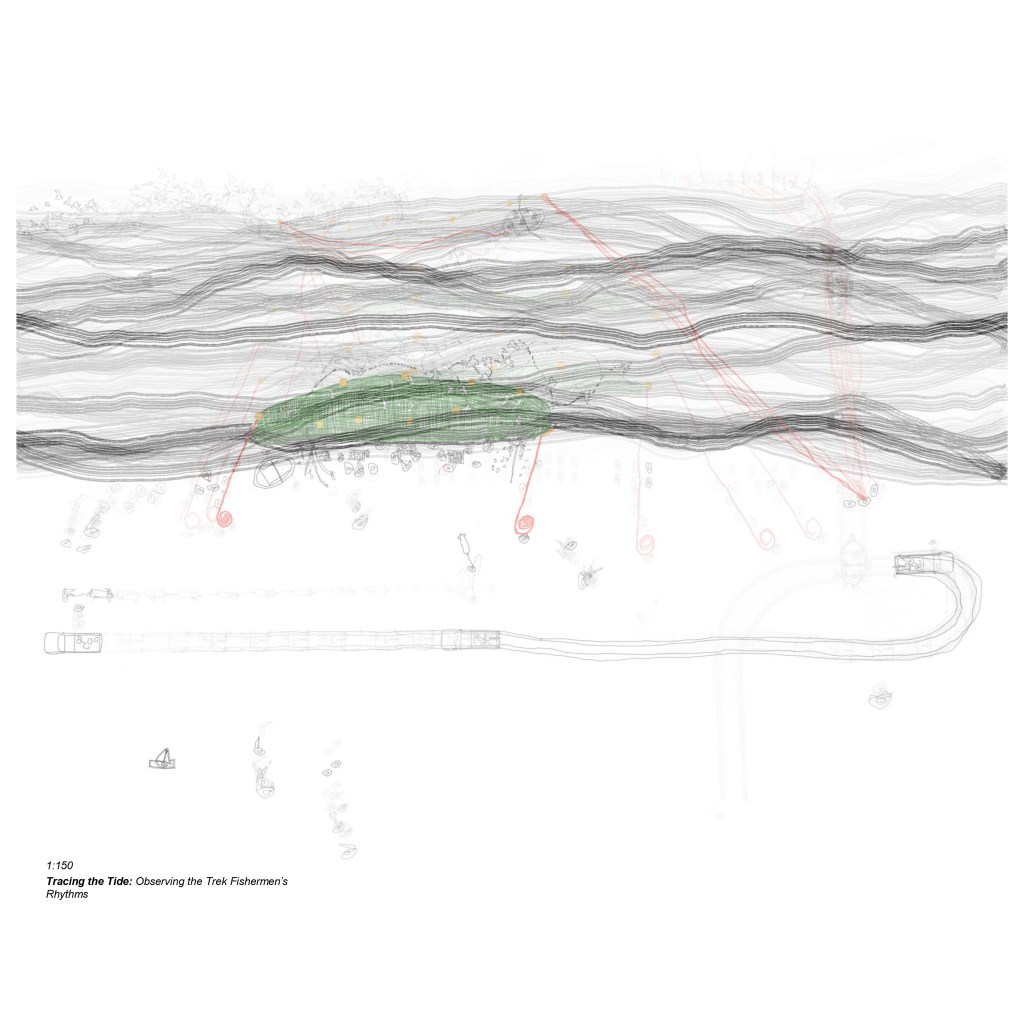
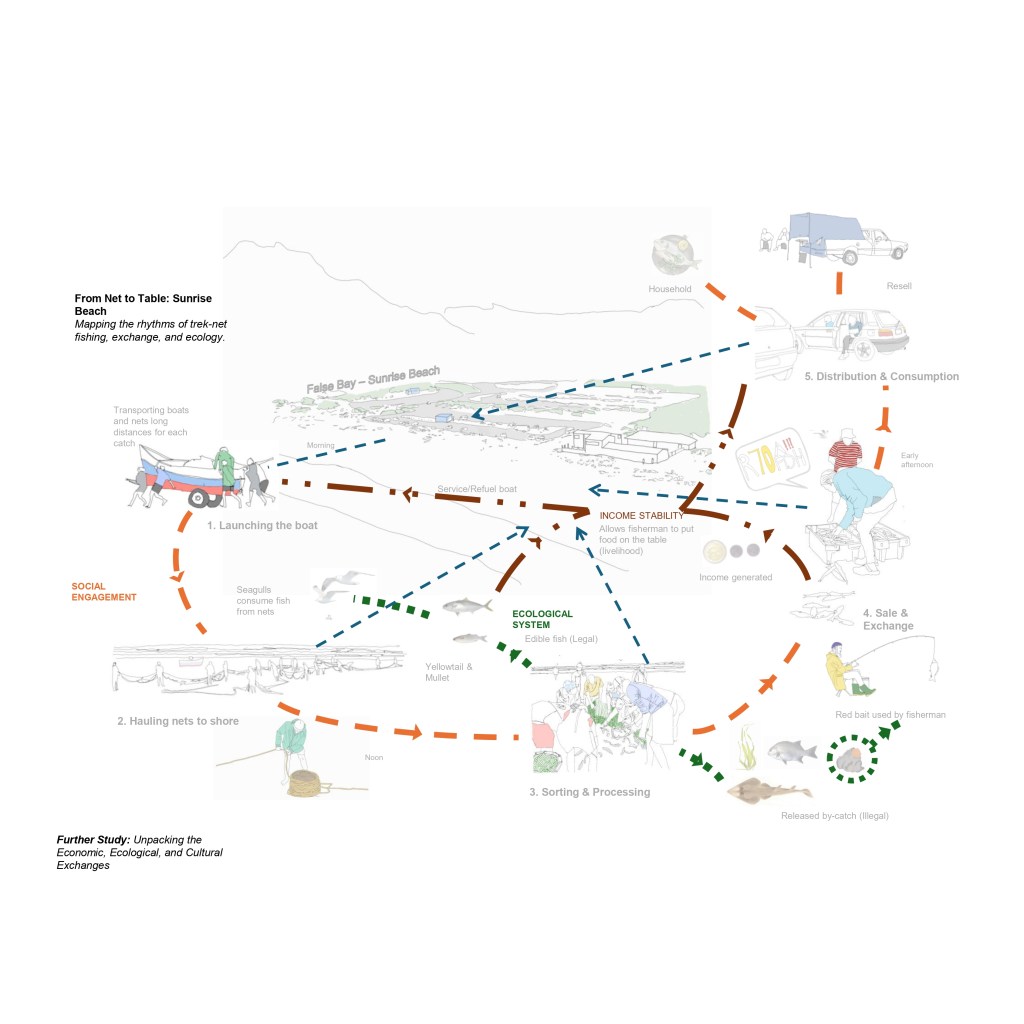
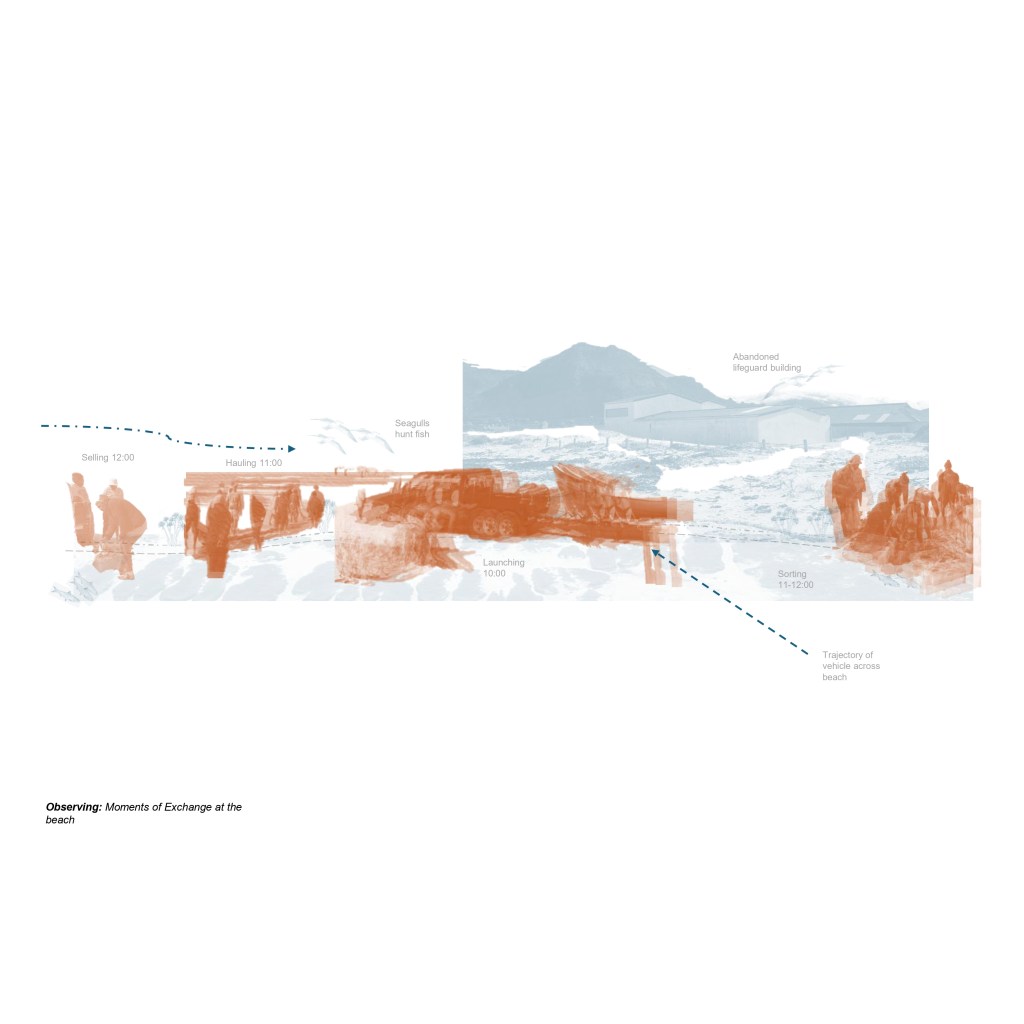
The design emerges from observation rather than imposition — through ethnographic fieldwork, walking, drawing, and direct engagement with the fishermen who work this stretch of coast. Mapping revealed a precise choreography, structured by tide, cooperation, and restricted access: what first appears informal is in fact a highly coordinated, adaptive infrastructure, one that has operated for years without any architectural support at all.
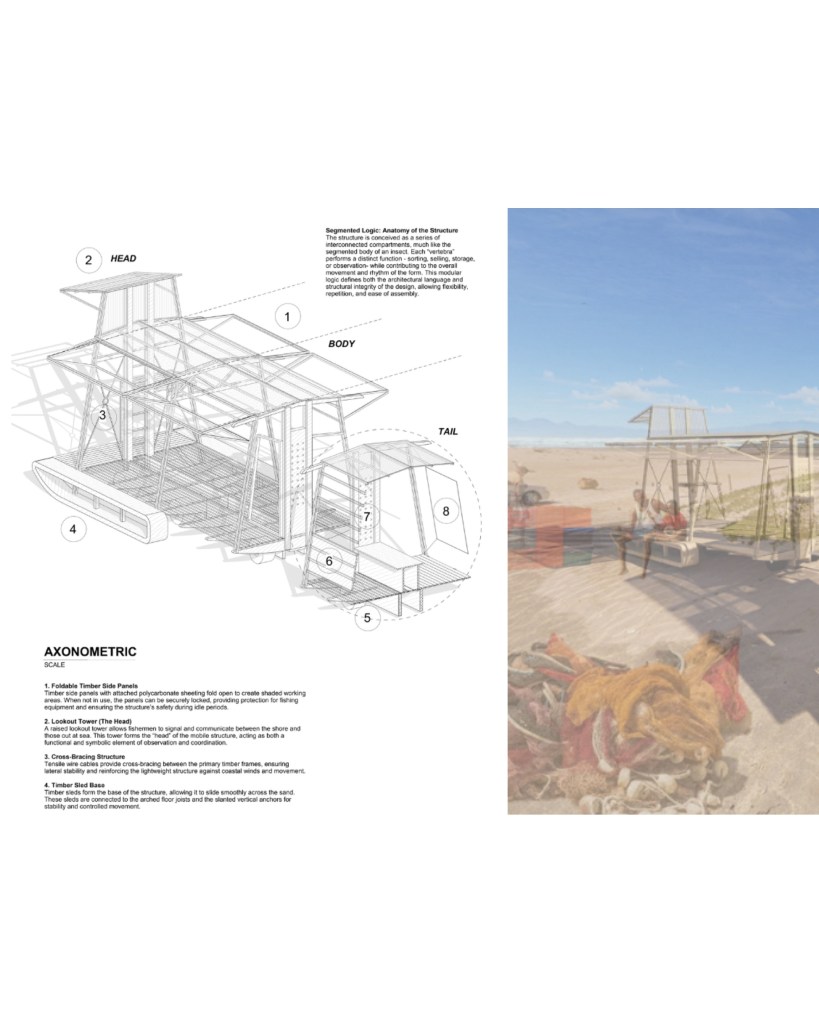
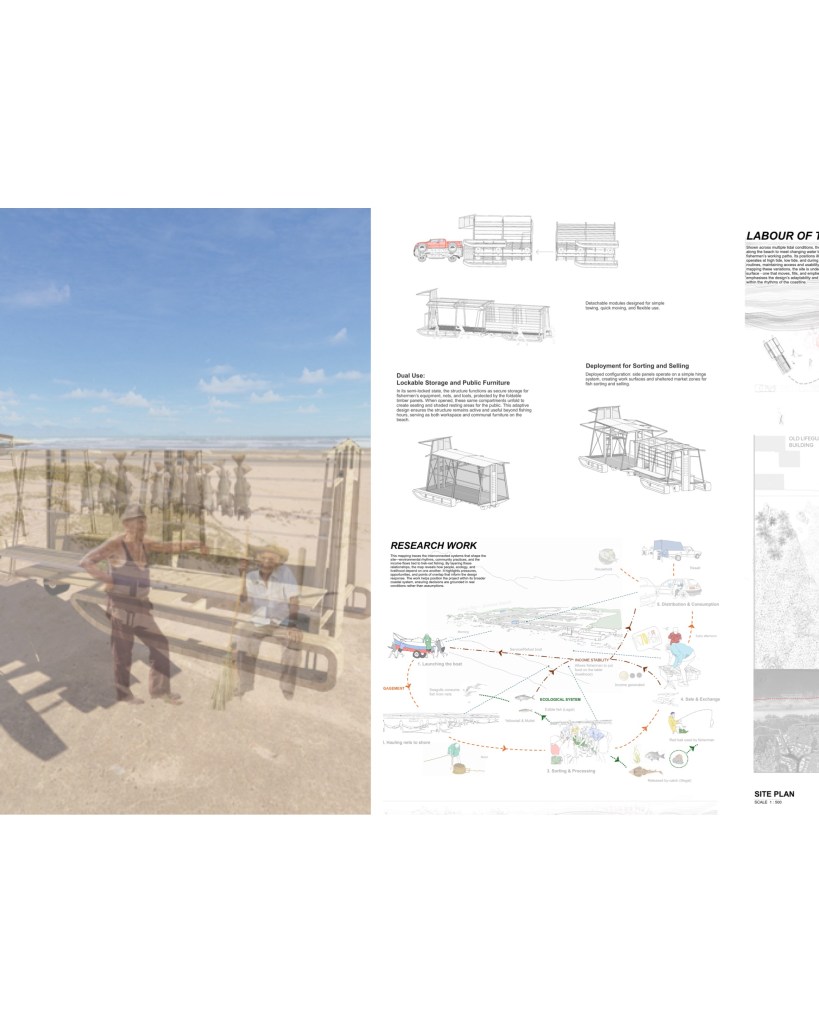
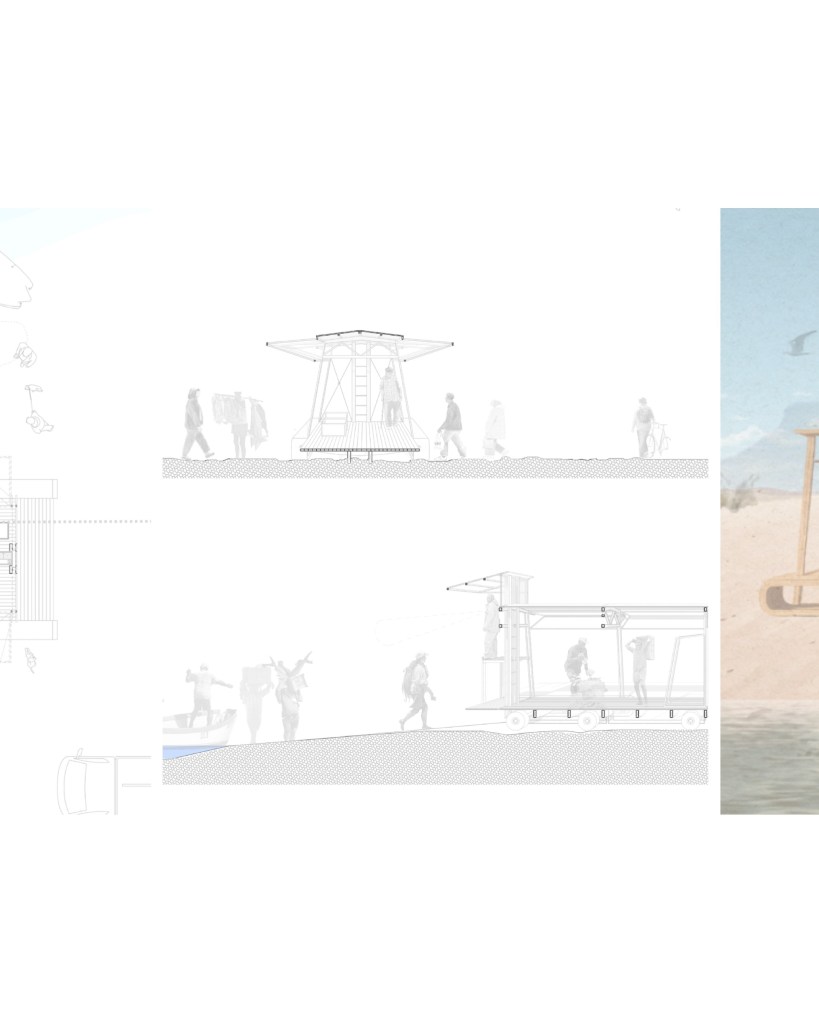
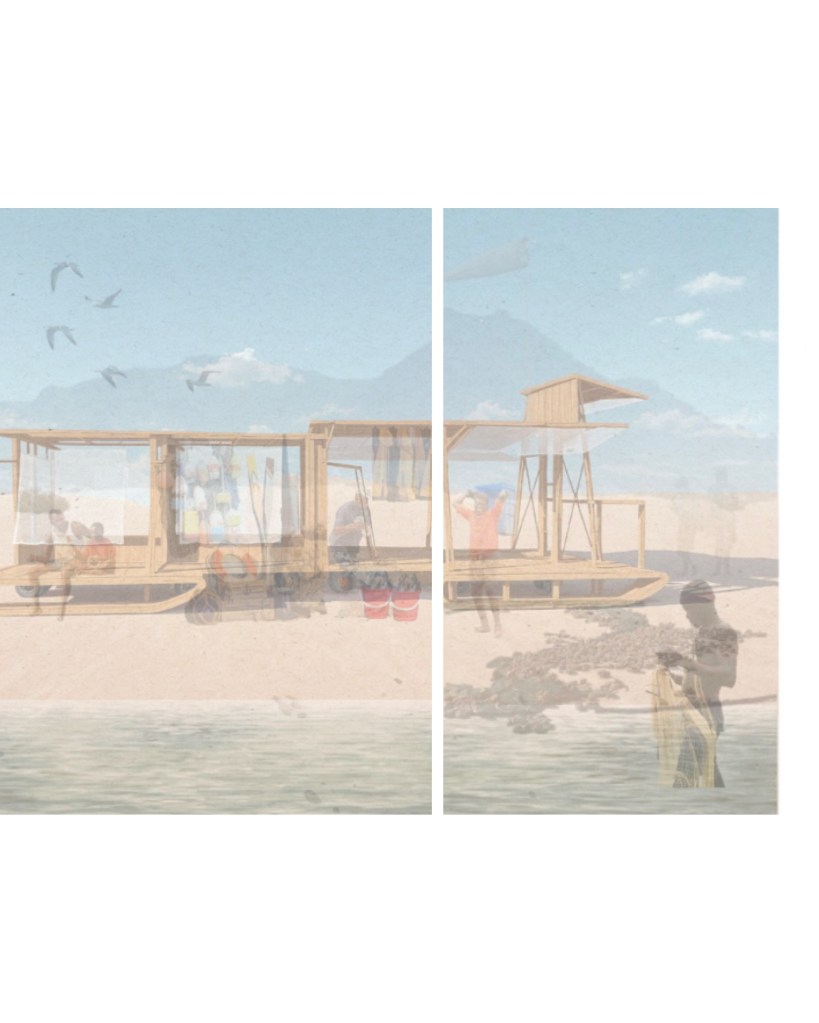
The project argues for visibility, access, and continuity — for a coastal space that accommodates working practices which predate the logics of redevelopment and tourism now reshaping the bay. Rather than reinstating a fixed pavilion, it proposes a mobile architectural system: one organised as head, body, and tail, assembling and dispersing according to the day’s workflow. It supports:
- launching
- sorting and cleaning
- net repair and storage
- selling and exchange
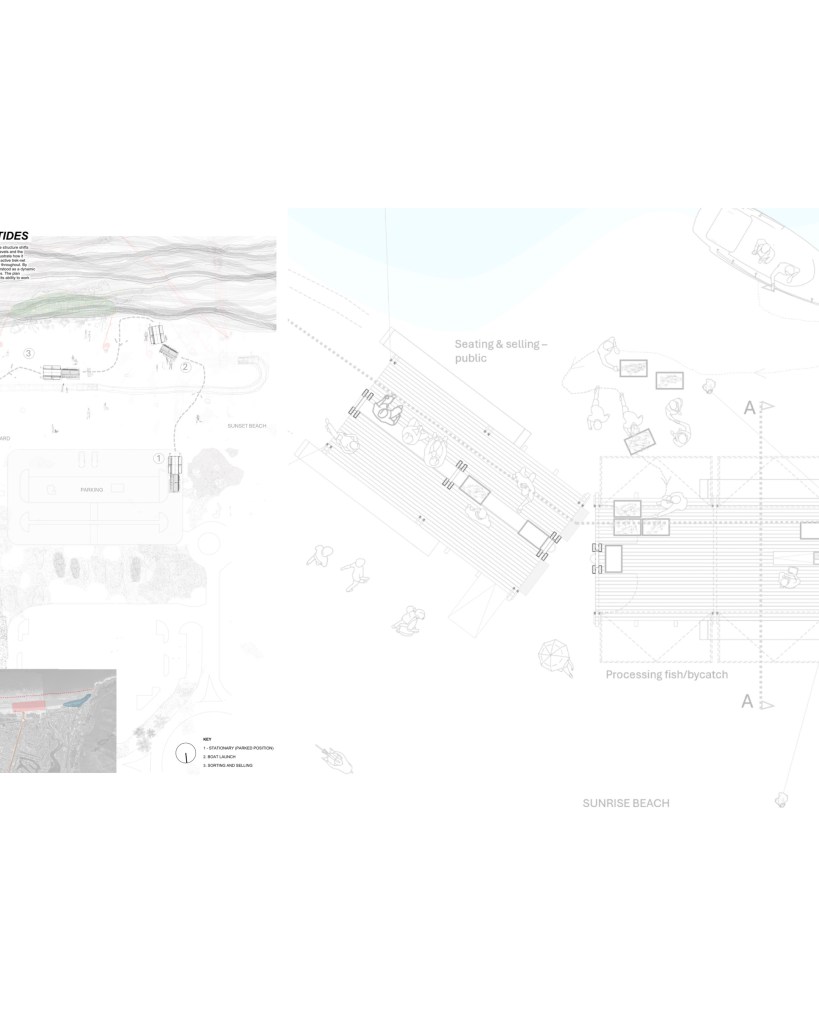
Timber sled bases and an integrated axle system allow the structure to relocate across sand and firmer ground — positioning architecture as responsive infrastructure rather than static object. Its logic is atmospherically close to Theo Jansen’s adaptive mechanisms: movement itself becomes the spatial principle. The structure clusters during exchange, stretches during transition, and returns to the parking edge once work is done — mirroring the sequence of arrival, pull, and distribution that already governs the beach.
Repair, here, is not the fixing of what is broken. It is the recognition of what already works.
Labour of Tides positions architecture as companion to existing practice — supporting labour already embedded in the coastline. Designing with the tide, not against it.
 repairative architectures