What if the coastal pathway wasn’t just a route, but an act of repair?
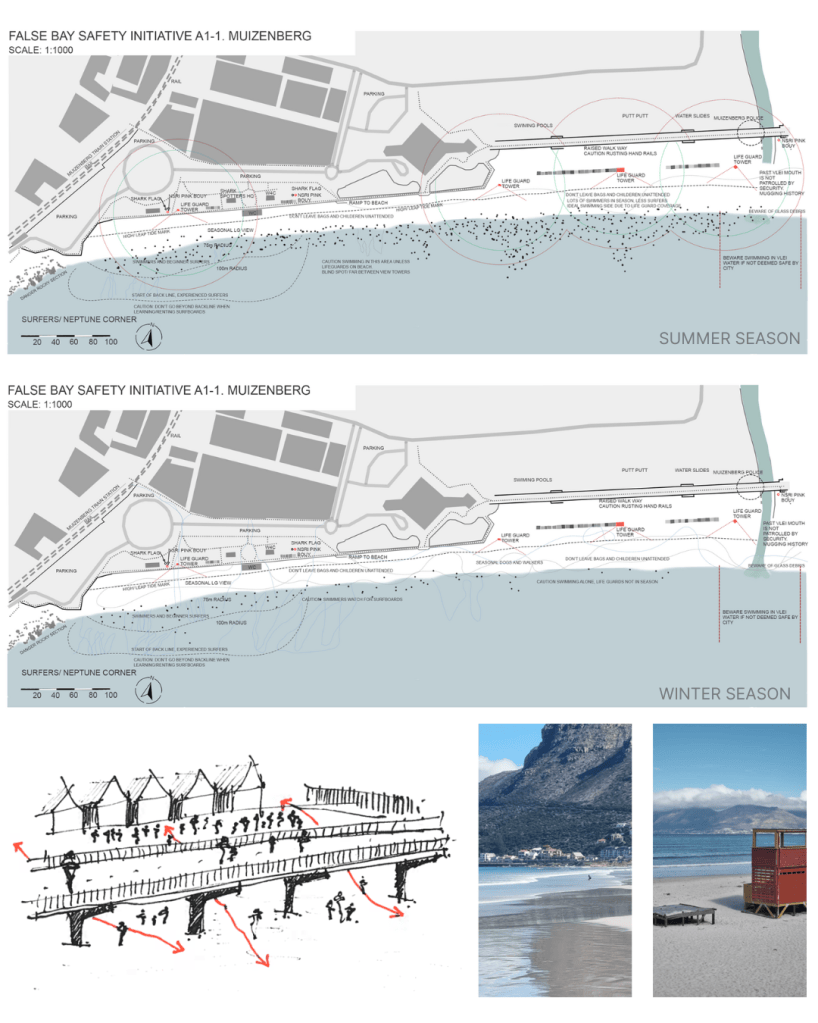
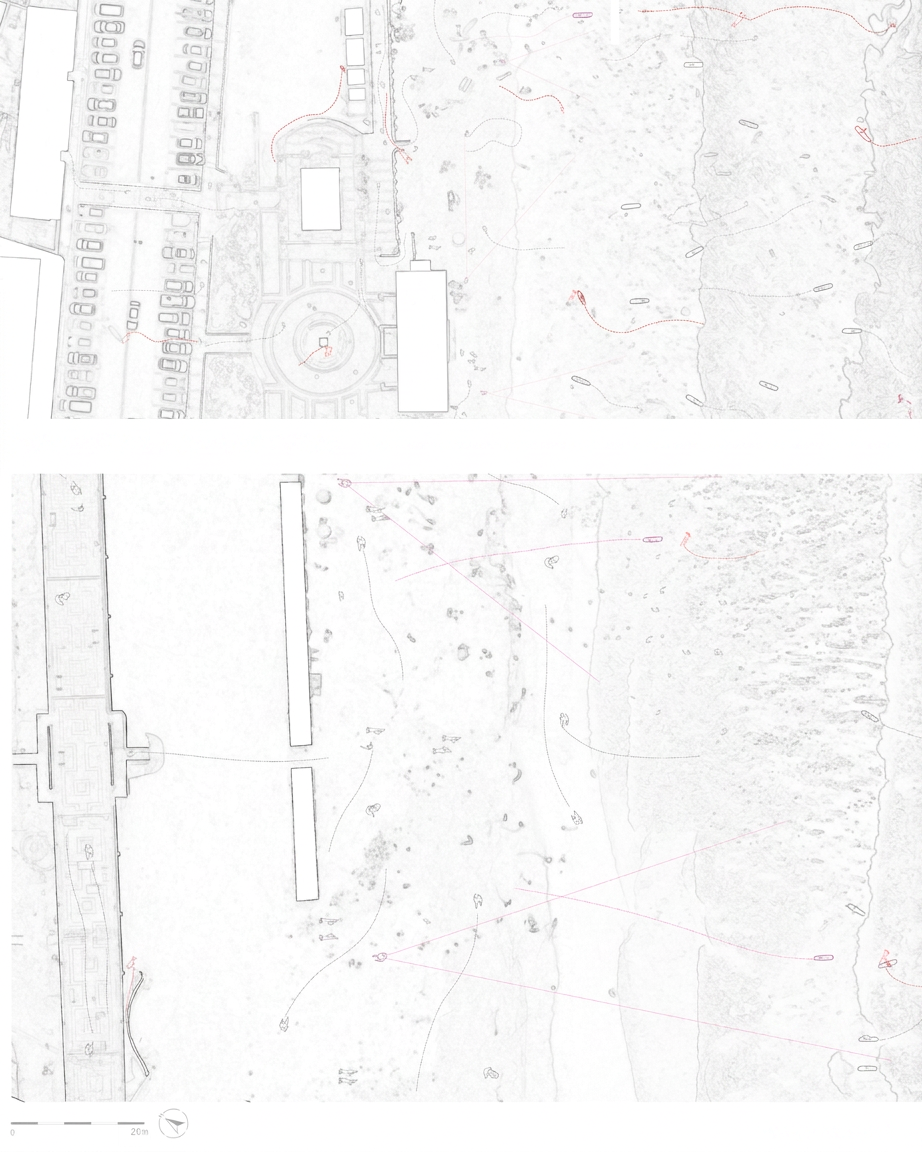
The beach, as it stands, is illegible. Its “chaos map” reveals a geography of blind spots and unseen pockets — a system where movement, visibility, and safety have never quite been distributed evenly. This project treats the pathway not as a solution imposed on that chaos, but as a form of ongoing attention to it: a way of repairing how people move, see, and are seen along the coast.
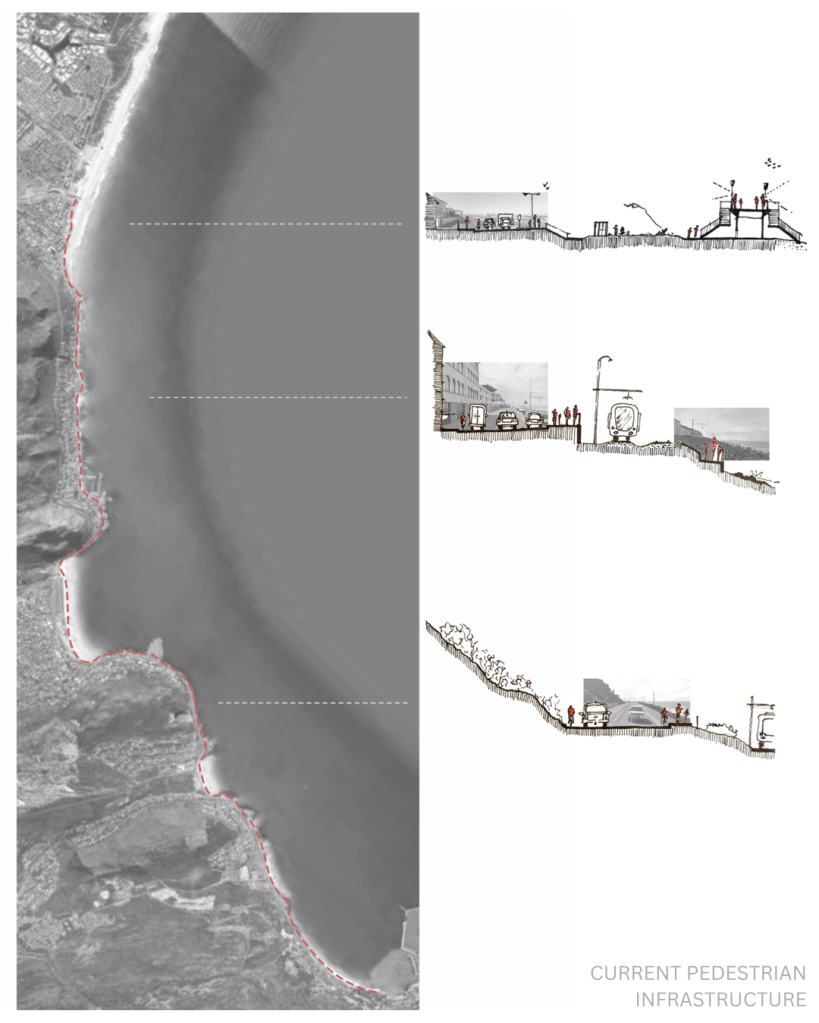
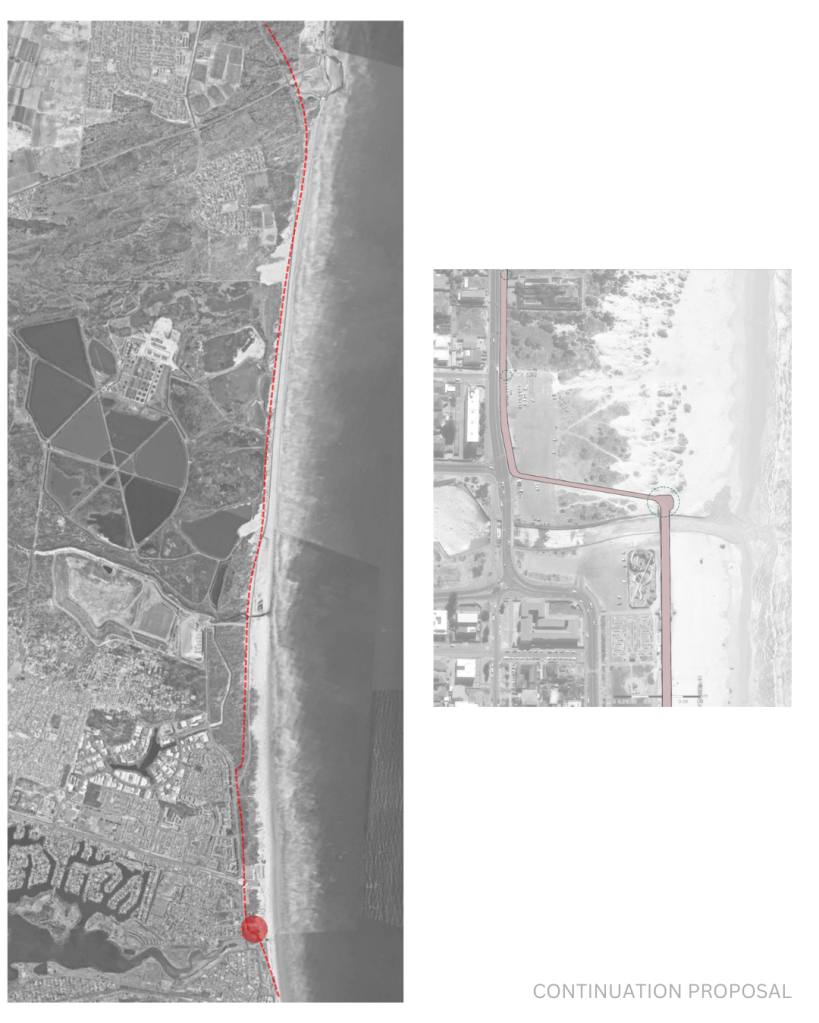
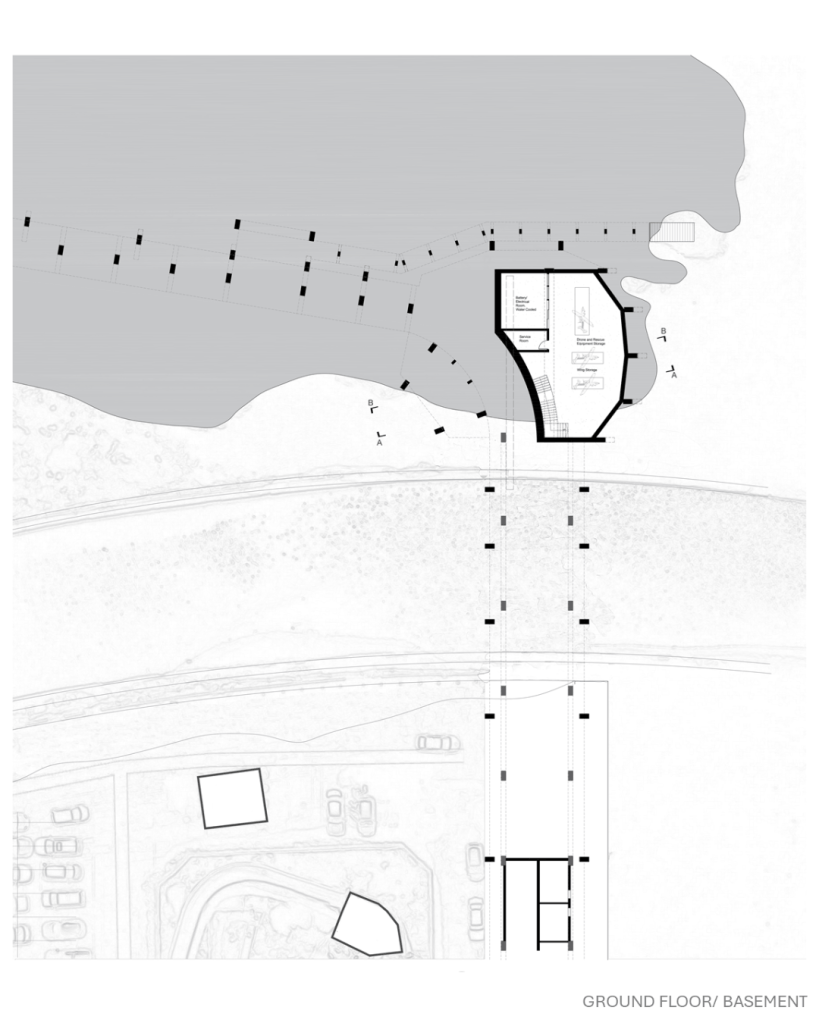
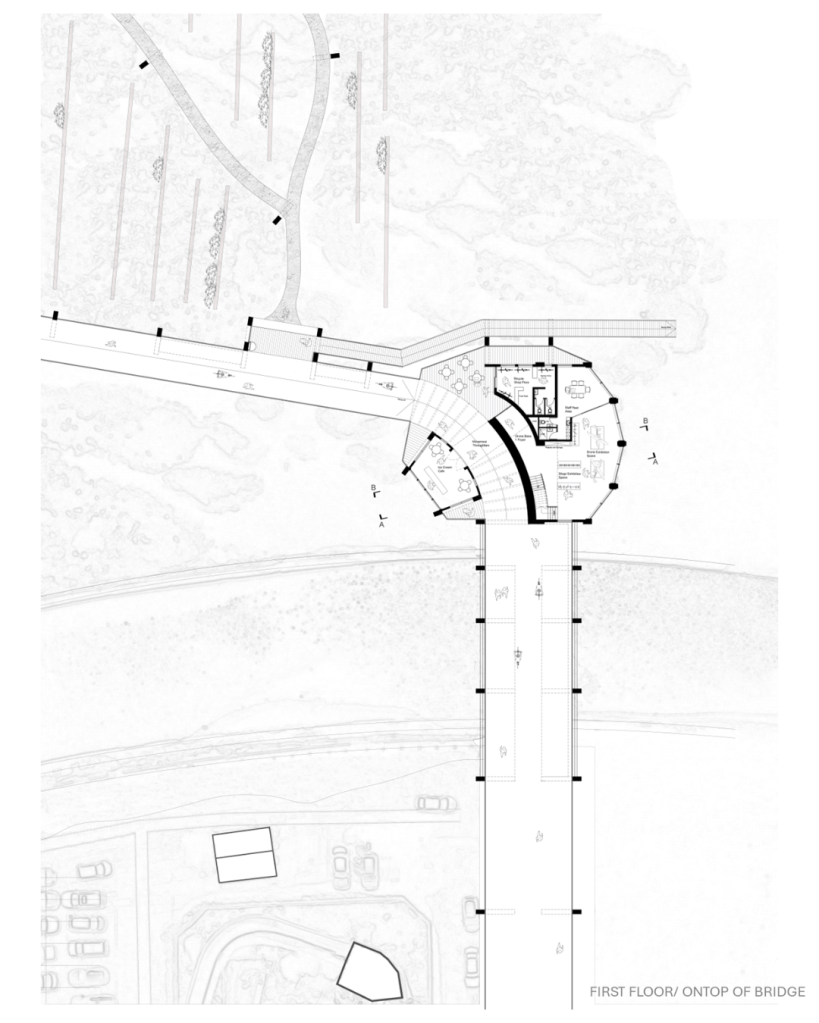
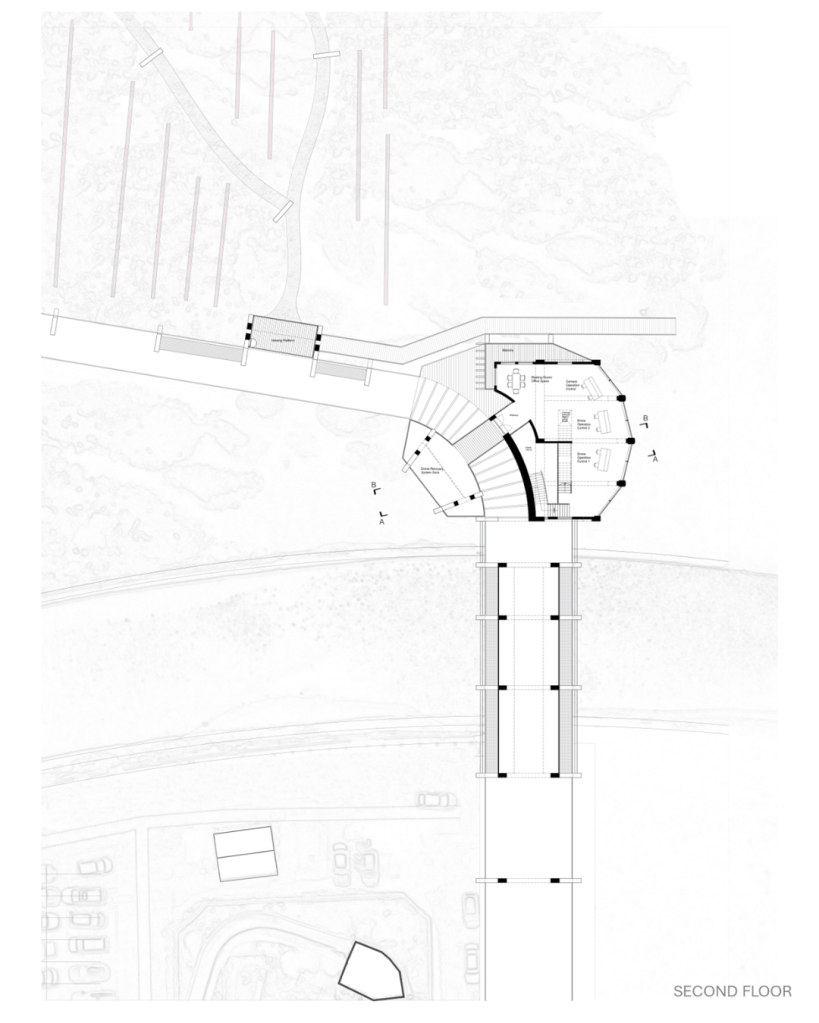
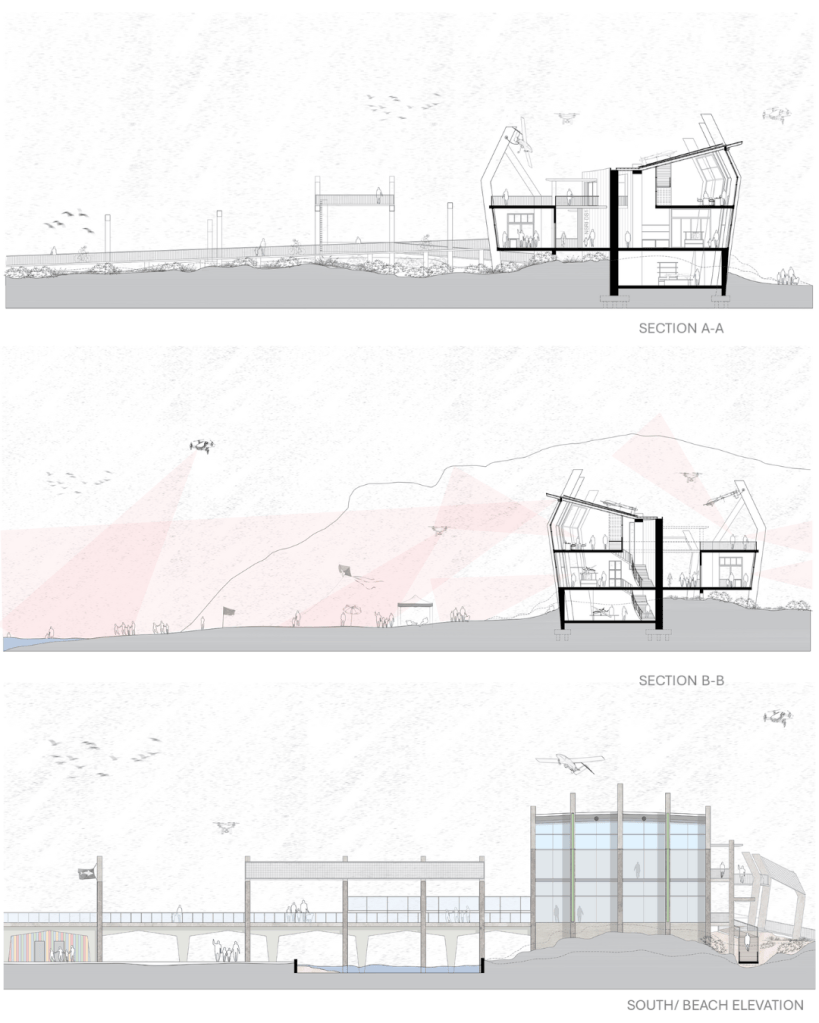
The intervention is deliberately modest. Rather than redesigning the beach as a whole, it works by acupuncture — small, precise insertions along the existing route that repair the larger pedestrian system without overwriting it. Circulation stays fluid, open, and legible, allowing pedestrian flow, cycling, and drone rescue operations to coexist without risk to swimmers.
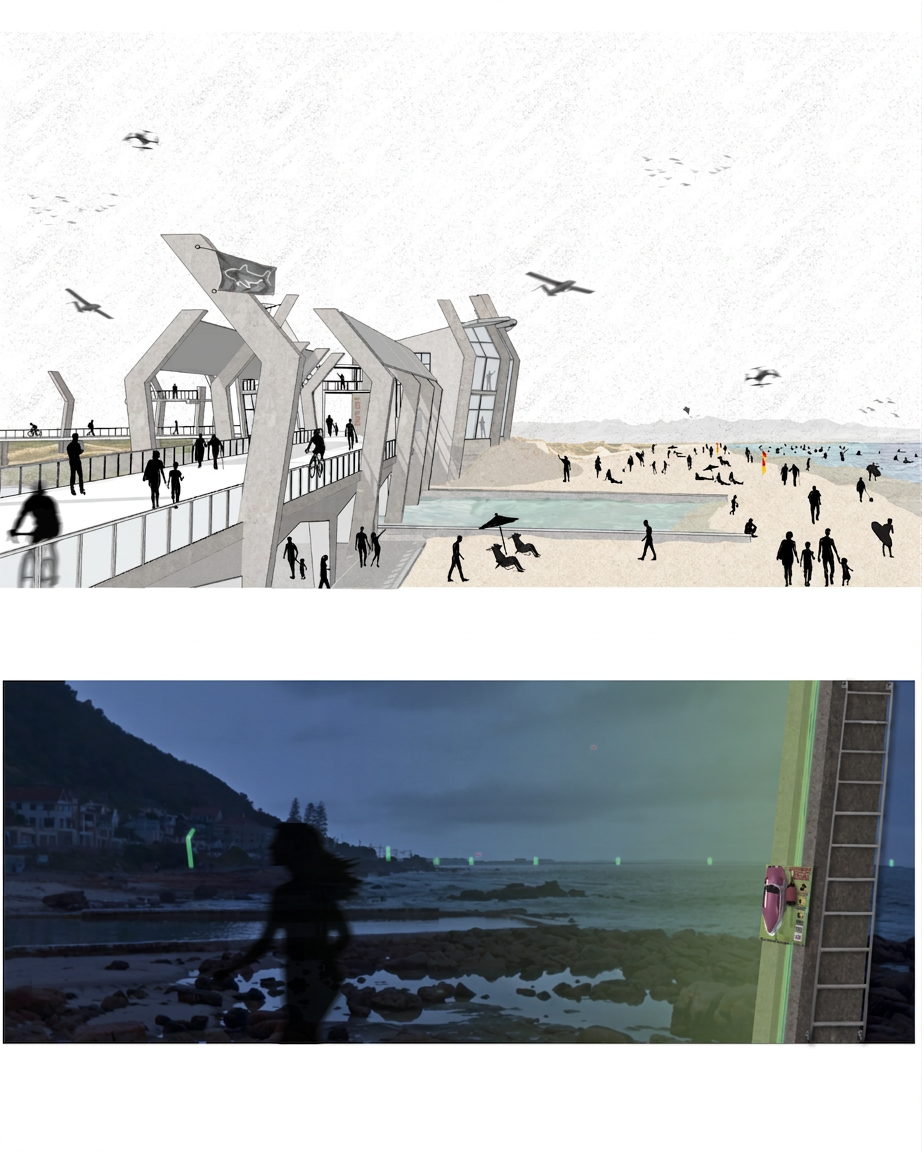
By day, this is simply infrastructure for movement. By night, it becomes something else. Embedded ribs, lit in green, punctuate the pathway — visible from Kalk Bay and beyond — each one responding to what the site already needs rather than what a masterplan might prescribe:
- rescue buoy holders
- integrated steps to the lifeguard chairs
- elevated safety markers
- points of orientation and meeting
None of these repairs the beach outright. Each is small, situated, and provisional — offering clarity and reassurance rather than resolution. What the perspectives show is instinctive: people are drawn toward these lit points, not because they’re told to be, but because visibility itself becomes a form of trust.
Not a pathway, then, but a system of resilience. Not infrastructure alone, but a network of community care — movement as protection, visibility as safety, repair as something the coast holds onto, together.
 repairative architectures