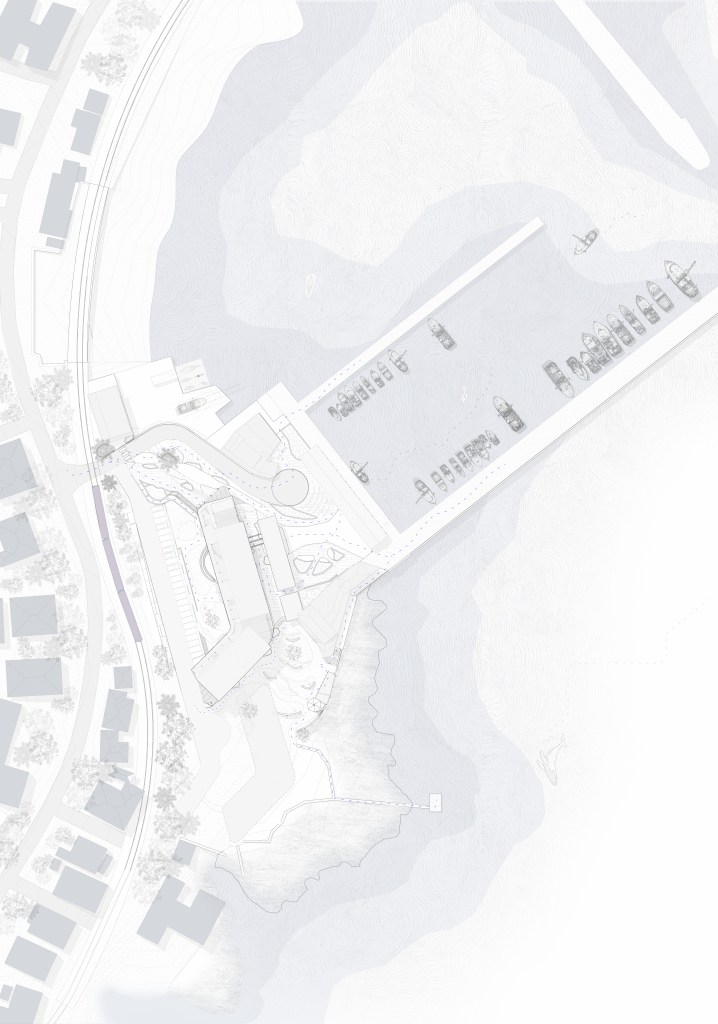
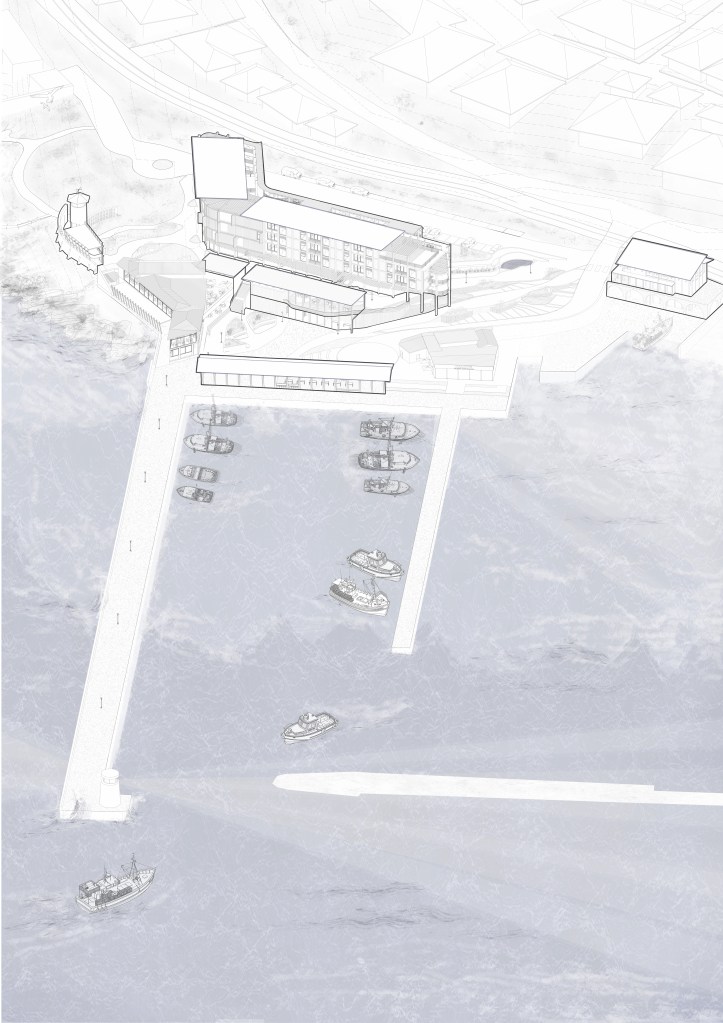
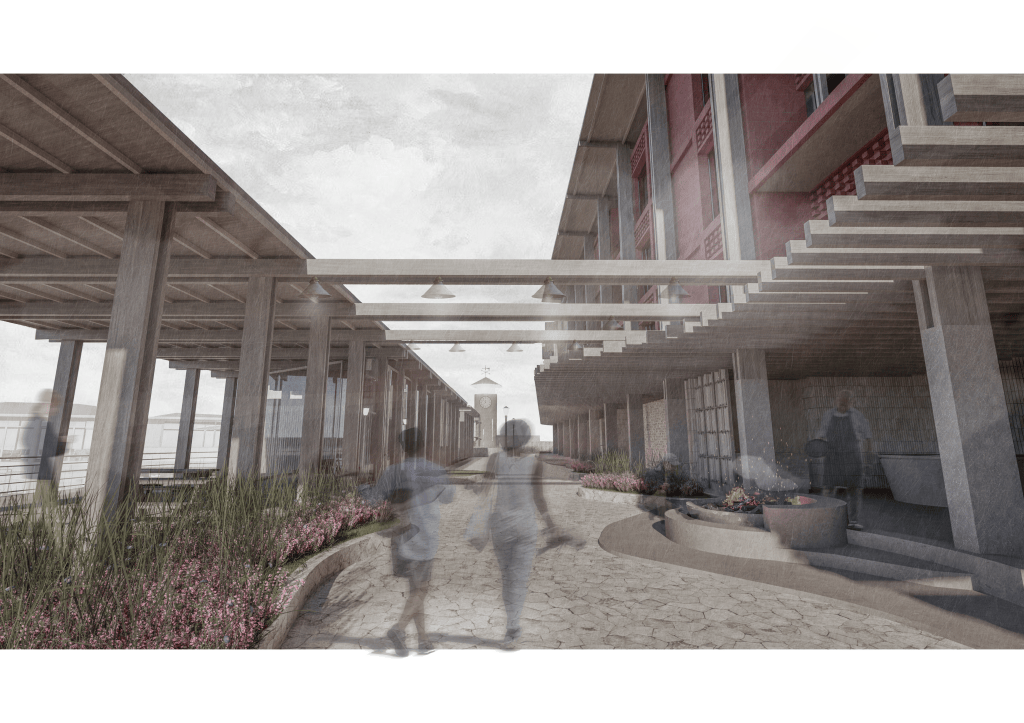
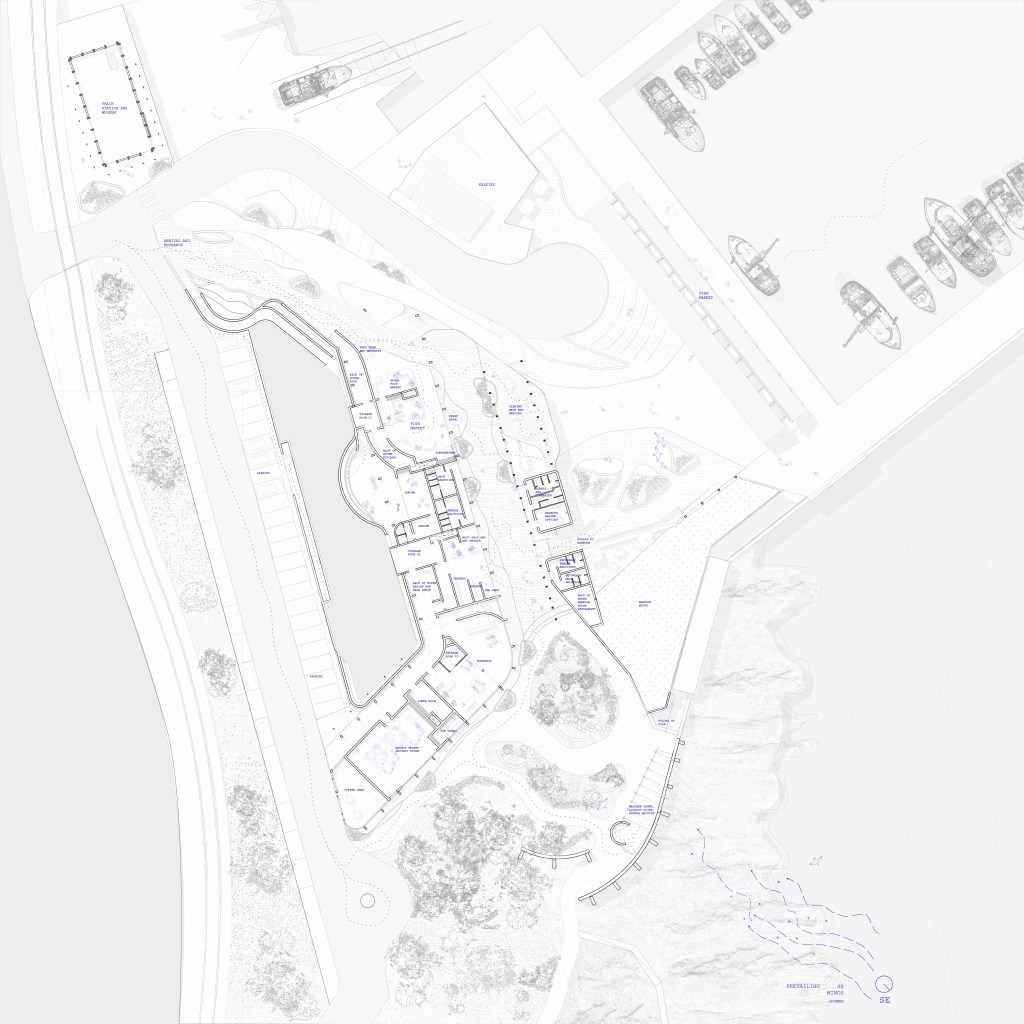
*This work was developed as part of the Sim Office Studio at UCT’s School of Architecture, Planning and Geomatics. It is not intended as a set of solutions. The proposals are speculative: a way of thinking and dreaming alongside the Fisher Child Project and the residents of Fisherman’s Flats in Kalk Bay. They form part of the Fisher People’s Flats Research for 2026.
Students (Studio SLIC):
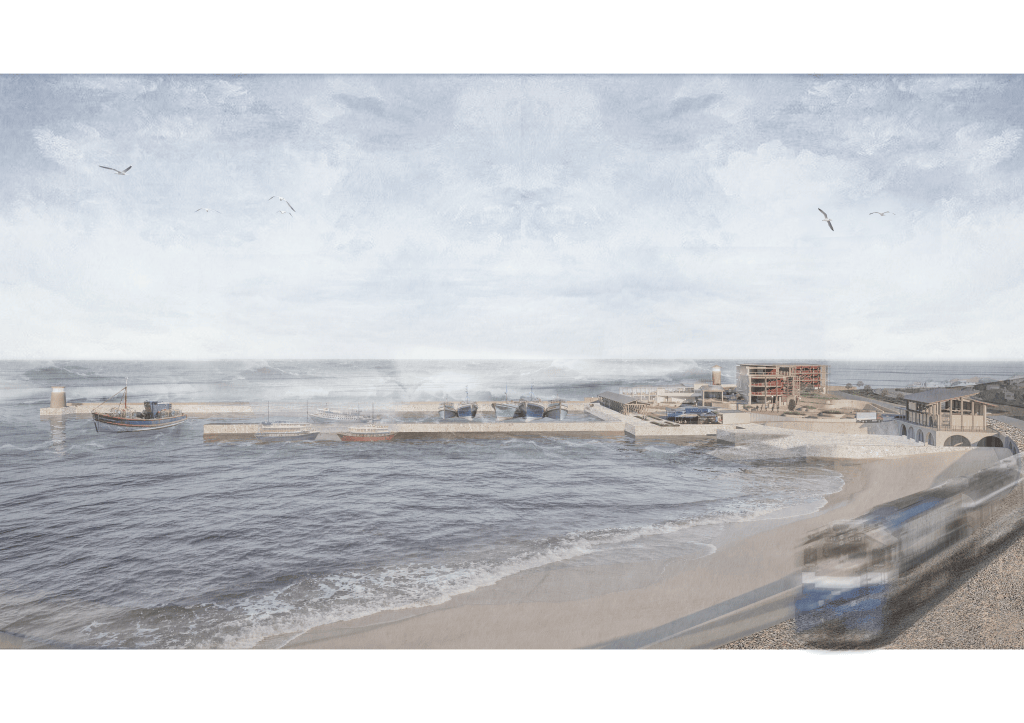
This project reimagines Kalk Bay Harbour as a site of repair, restitution, and continued fishing life. Grounded in months of community engagement (following a “Diagnosis → Dreaming → Developing → Defining” framework), the students structured their proposal around three intertwined lenses: Value Exchange (the economic labour and processes of fishing), Harbour Processes (the environmental systems of the bay), and Ontology & Preservation (the cultural memory and heritage of the fishing community).
At its core is a Harbour Land Trust & Housing Co-op model: the land stays in a trust jointly held by Transnet, government, and community representatives, while a 99-year lease (at a nominal R1/year) grants the housing co-op — made up of fishers and land reclaimants — ownership of the buildings themselves. This structure draws on local precedents like Dido Valley and Protea Village restitution housing.
Housing is proposed in two phases, prioritising working harbour staff first, then reclaimants — descendants of families displaced under the 1934 Slums Act and 1967 Group Areas Act, along with fishing families priced out by gentrification and local youth wanting to continue the trade. Four unit typologies (from 30 sqm bachelor units to 97 sqm 4-bedroom “digs”) respond to the different tenant profiles working the harbour, from seasonal deckhands to the Harbour Master.
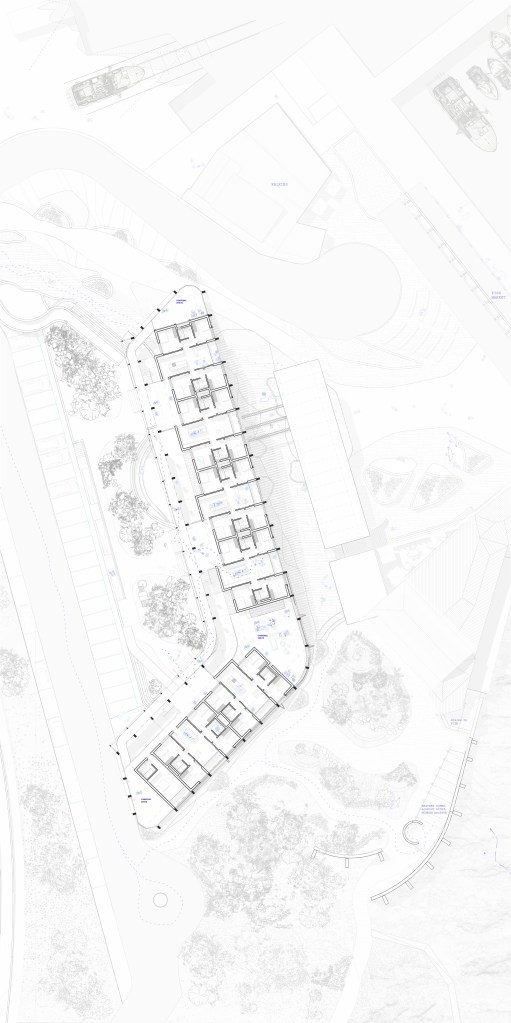
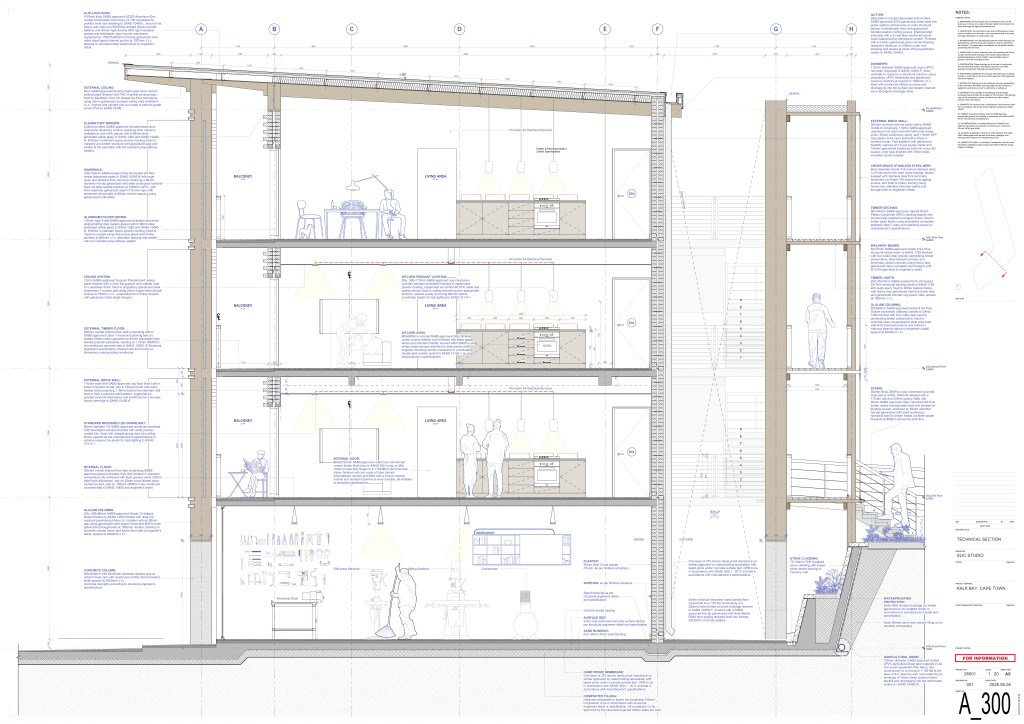
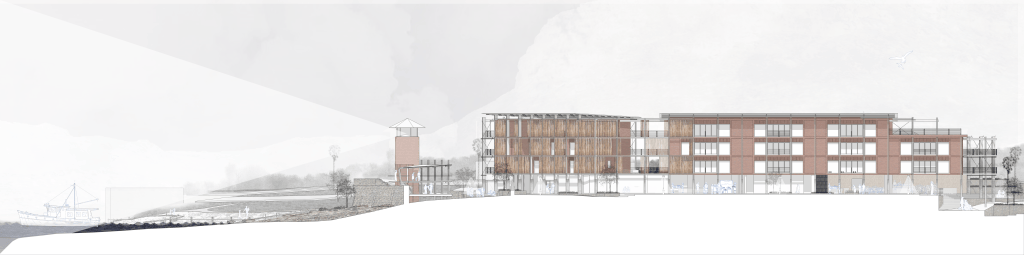
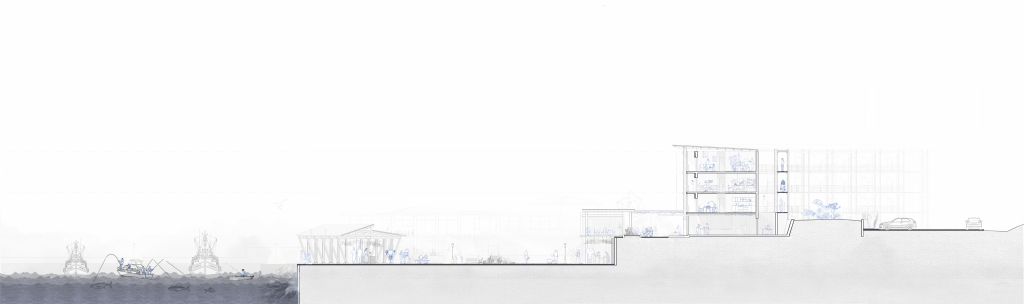
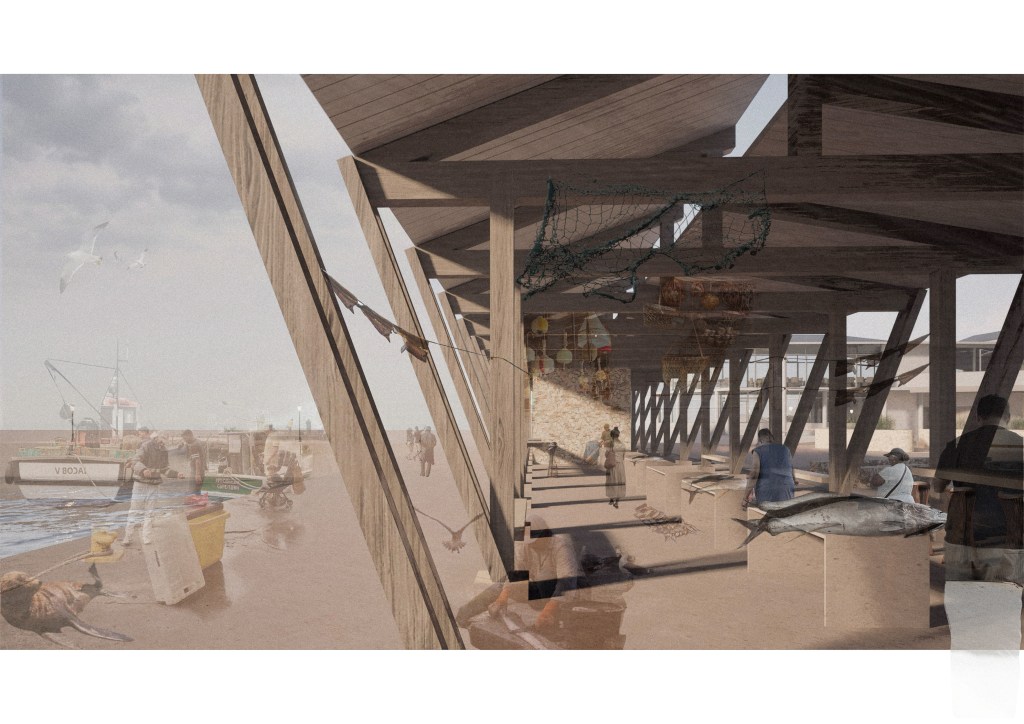
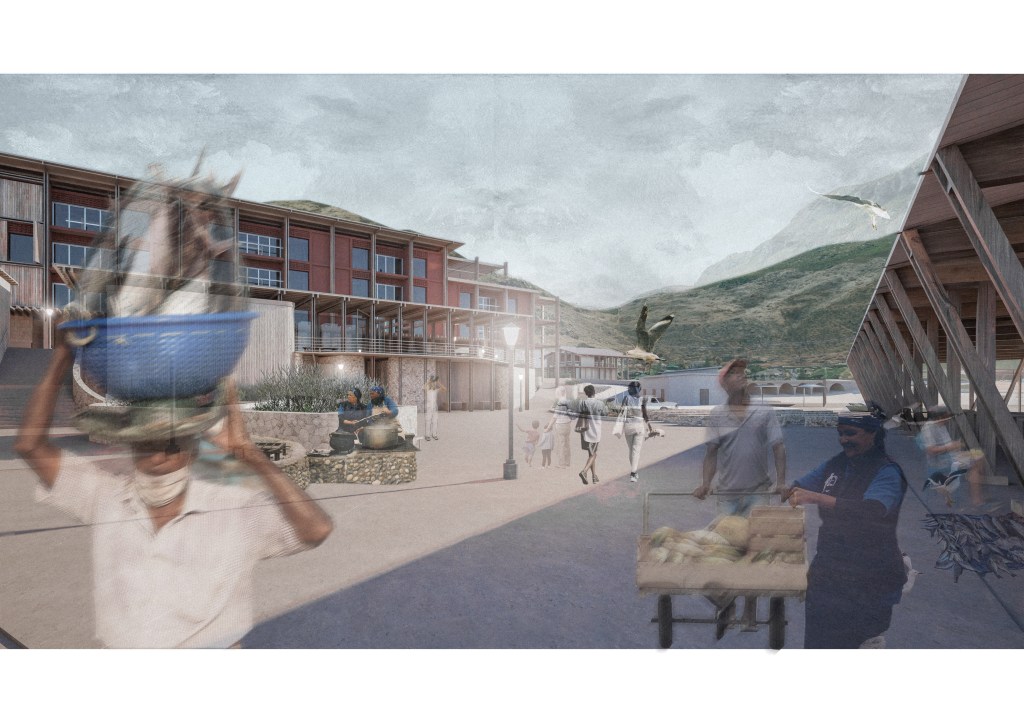
The architecture itself is designed as a long, bent form that shelters the harbour’s public walkway, lifts residential floors above a working commercial ground level (fish processing, cold storage, market), and uses timber screens and a “wind break” massing strategy to respond to Kalk Bay’s strong onshore winds — with materiality intended to weather and patina over time, echoing the fishing gear and boats it sits alongside. A small contemporary museum and archive (“pinprick”) extends along the harbour arm, anchored by the historic weather tower and lighthouse.
Paragrapgh