Sonwabe Fishing Commons asks how coastal infrastructure can act reparatively on a shoreline shaped by ecological fragility and historical inequality.
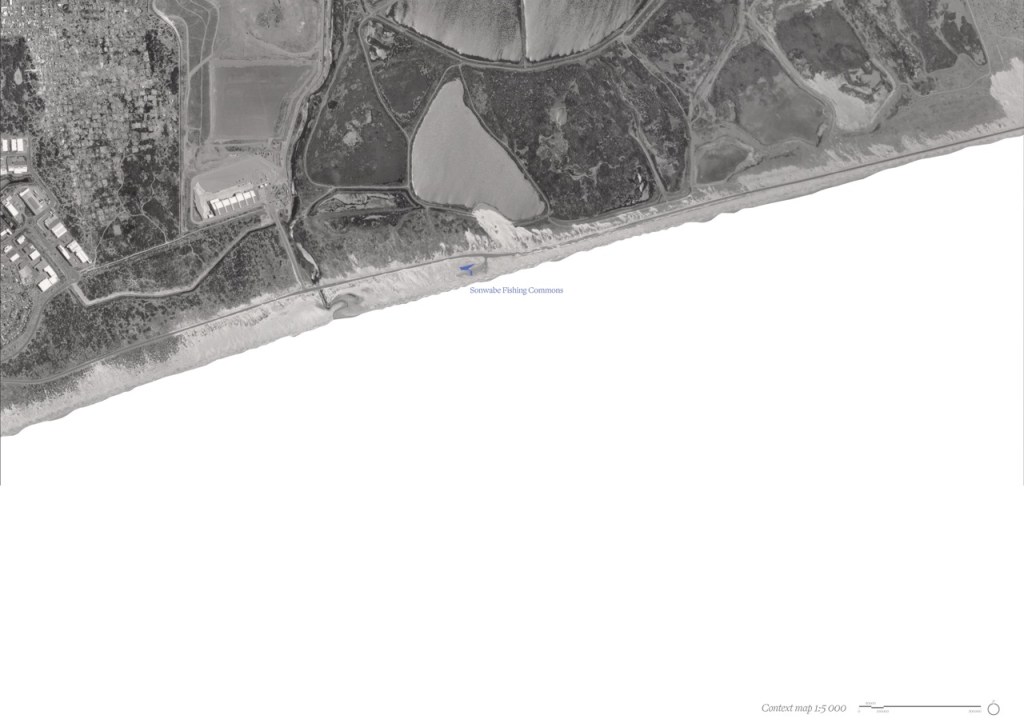
For decades, Sonwabe Beach has been used by small-scale fishers from the Cape Flats. Despite its daily activity, its cultural significance, and its proximity to the communities who depend on it, the site remains without formal infrastructure — a place that sustains livelihoods while receiving none of the recognition that would come with being built for.
The guiding question follows from that gap: how can spatial design support intergenerational fishing knowledge, safer livelihoods, and multispecies ecologies — without imposing new forms of control?
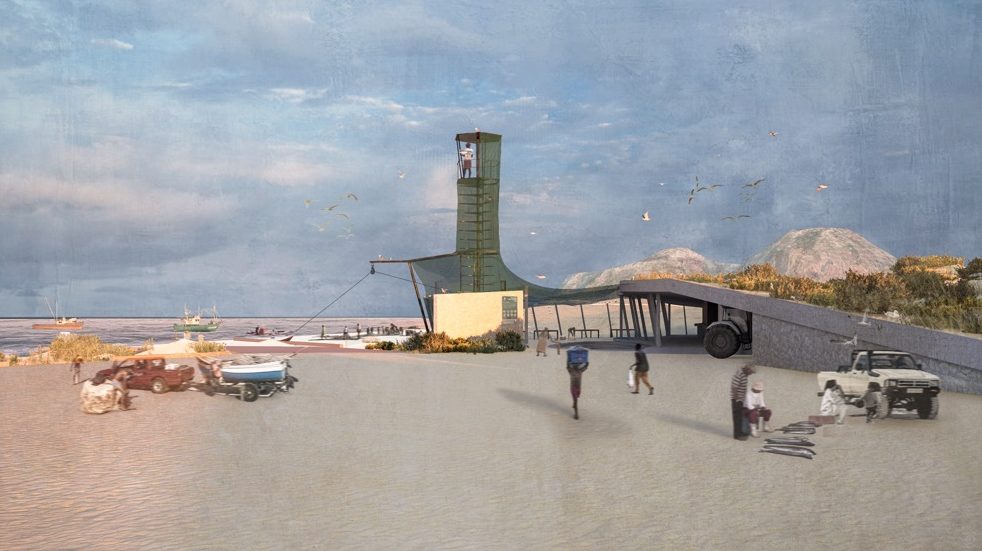
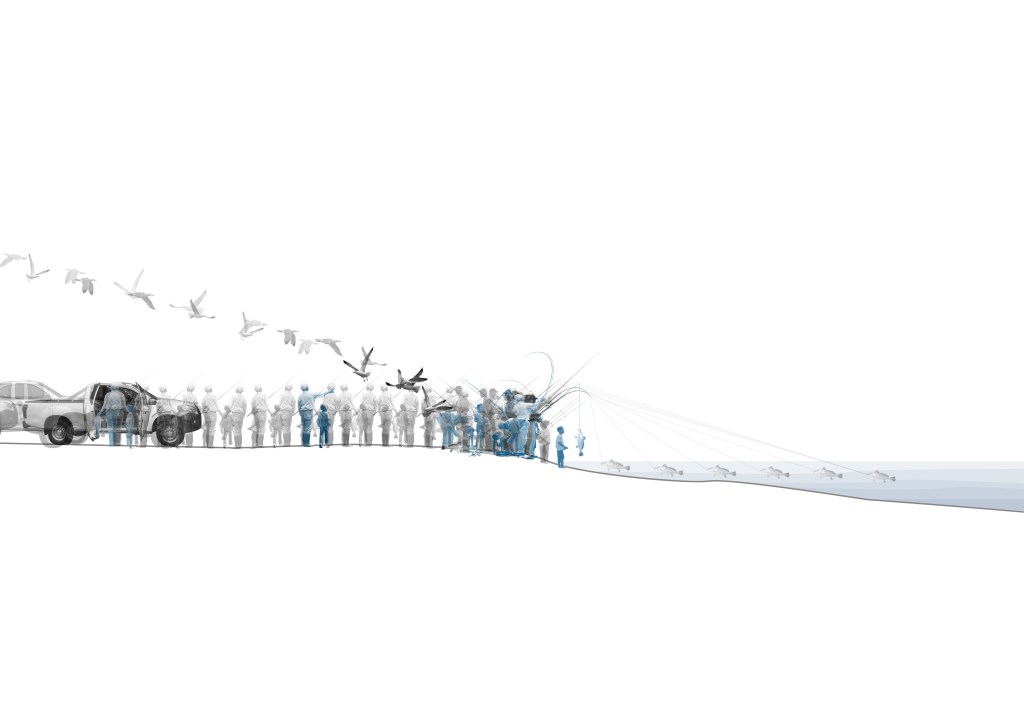
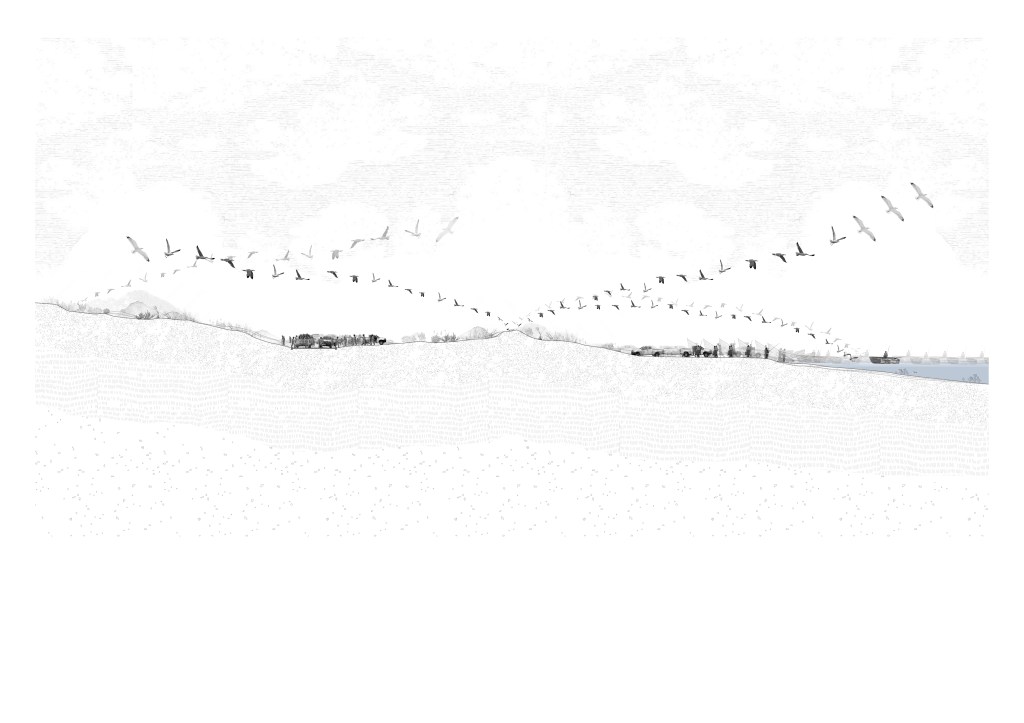
Through animated mappings, on-site interviews, movement studies, and ecological research, the project traces the relationships between fishers, seagulls, dunes, wind systems, and tidal rhythms. These interactions, rather than a predetermined brief, shaped a design that strengthens existing practices instead of replacing them.
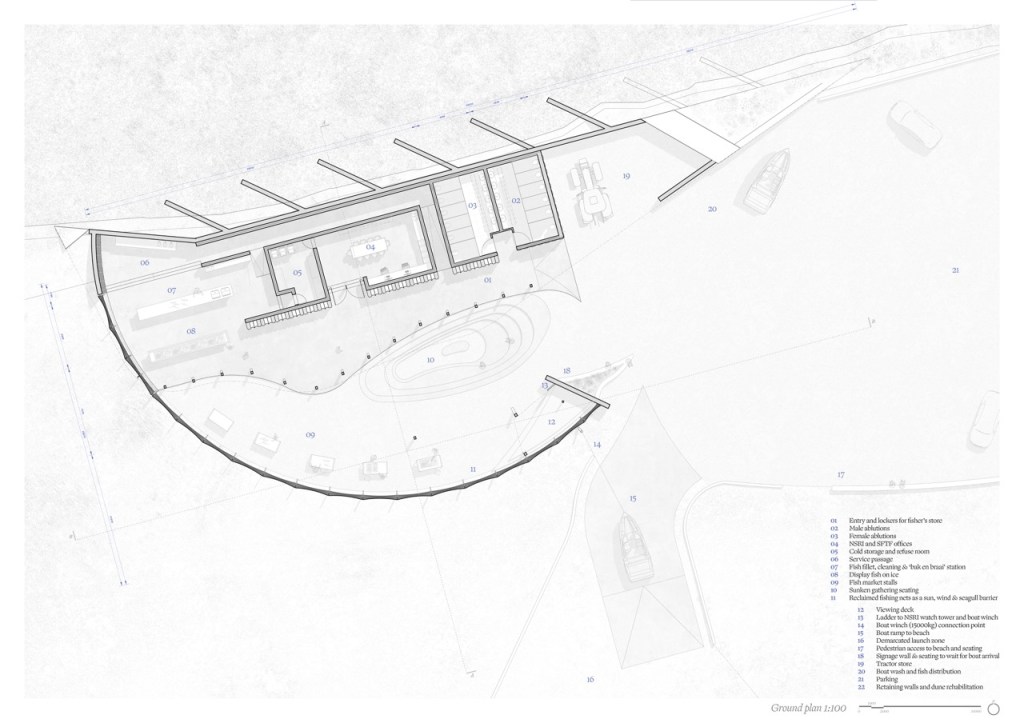
The proposal includes:
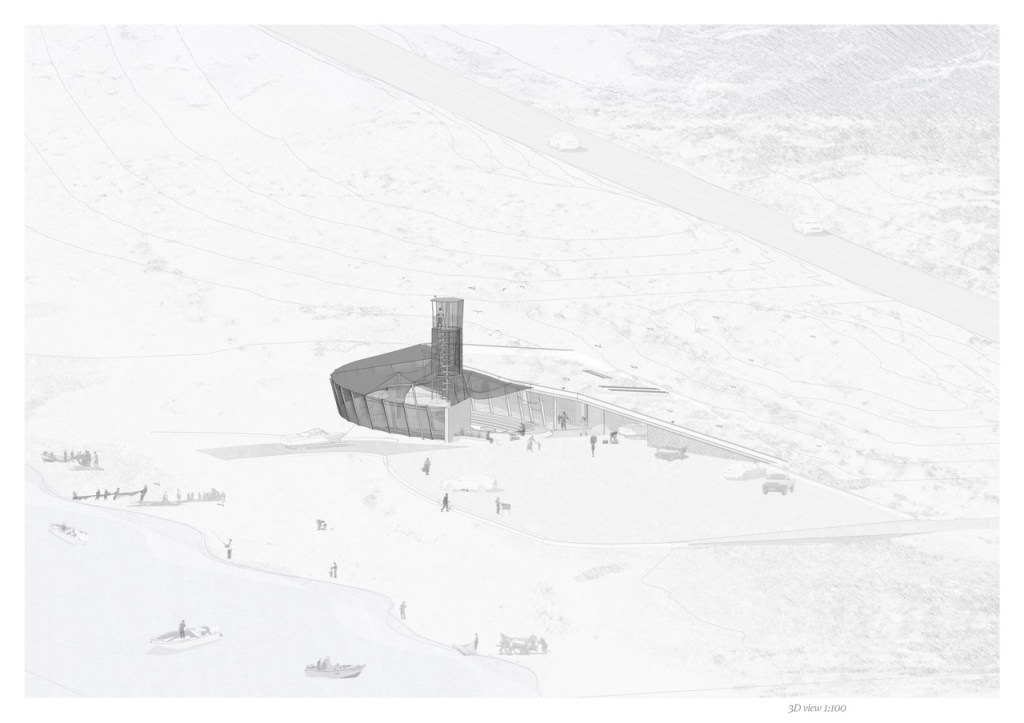
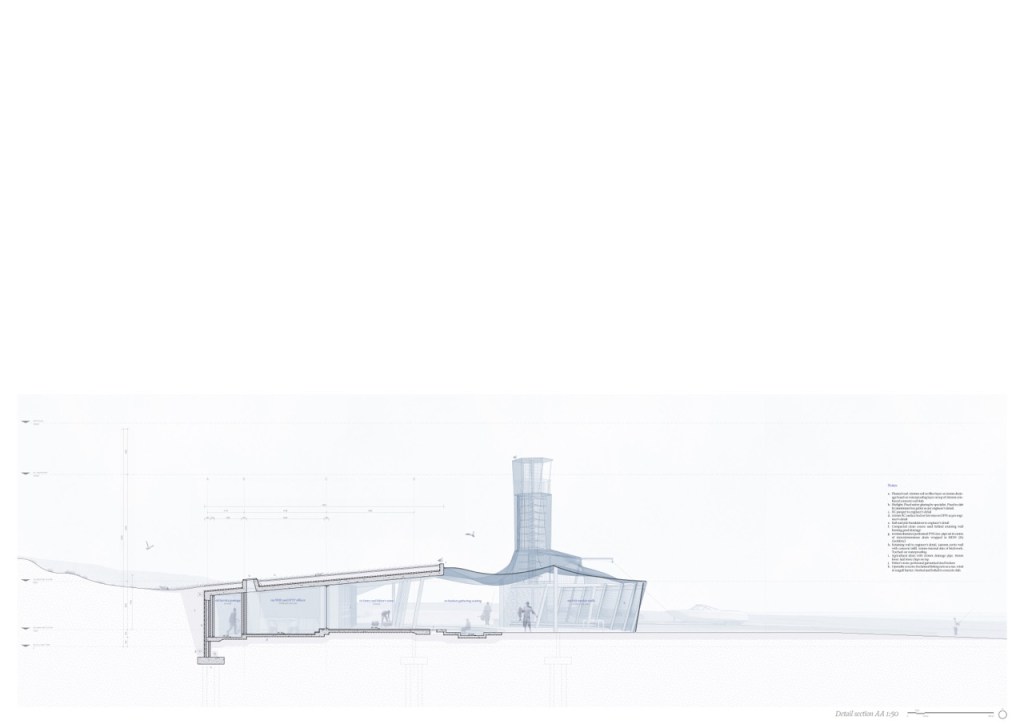
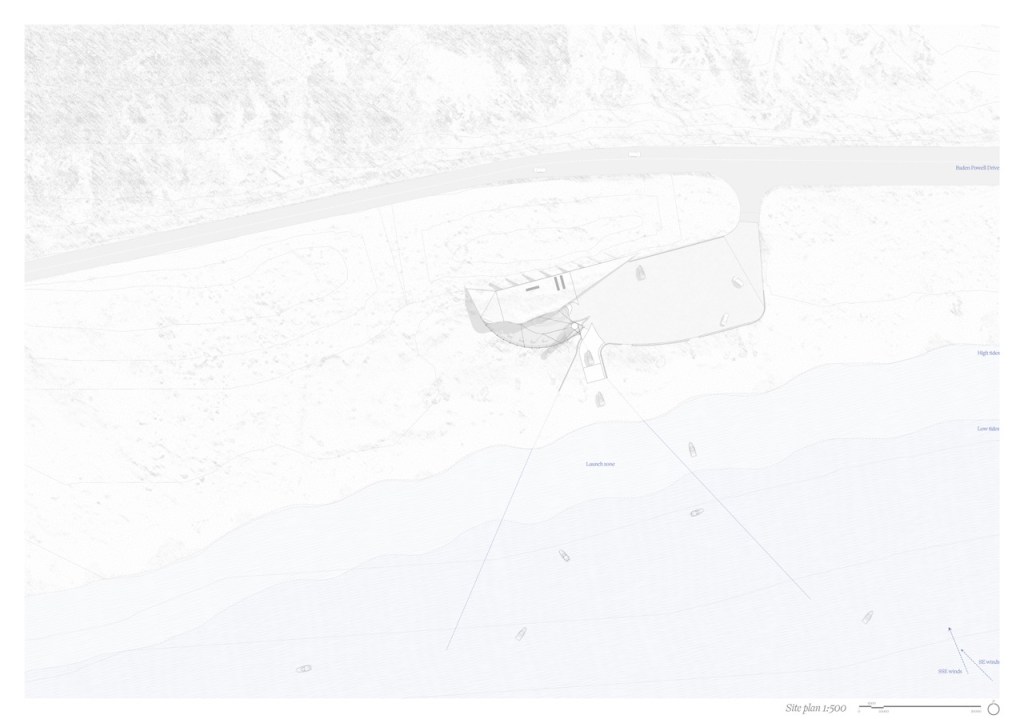
- a safe beach-launch zone
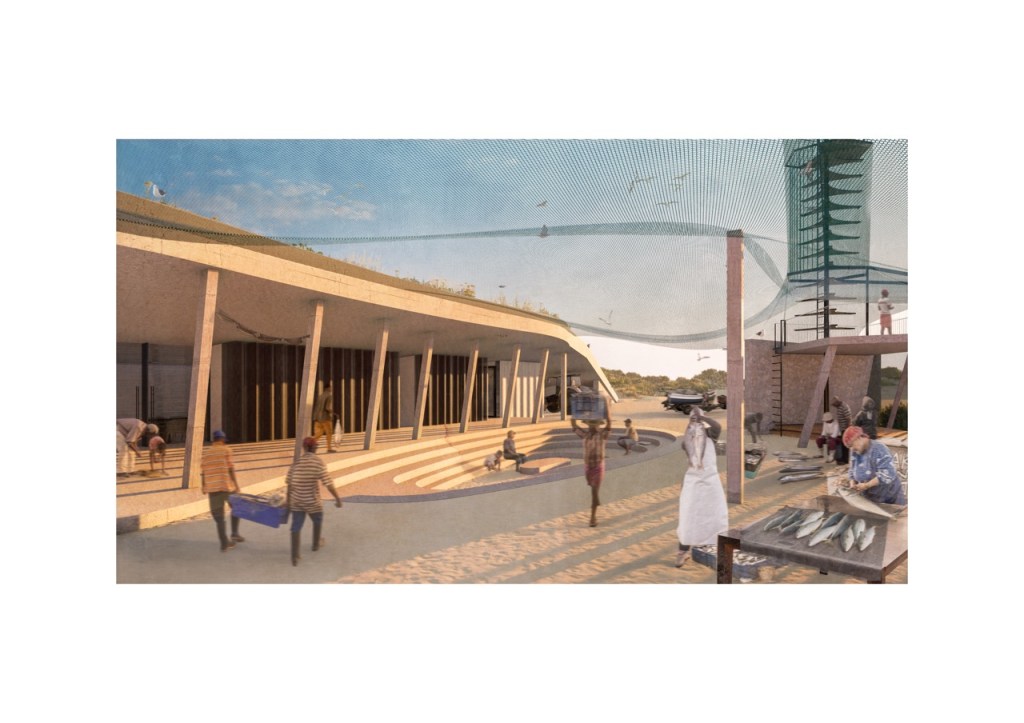
- fish cleaning, cooking, storage, and small market spaces
- a governance hub for the Sonwabe Fishing & Tourism Front
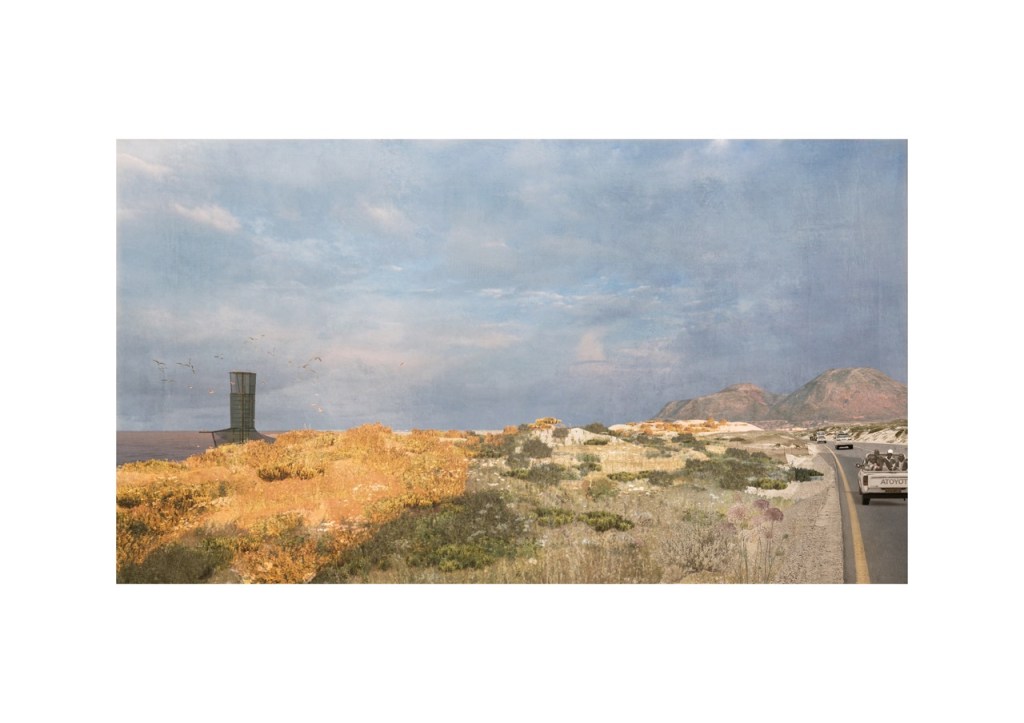
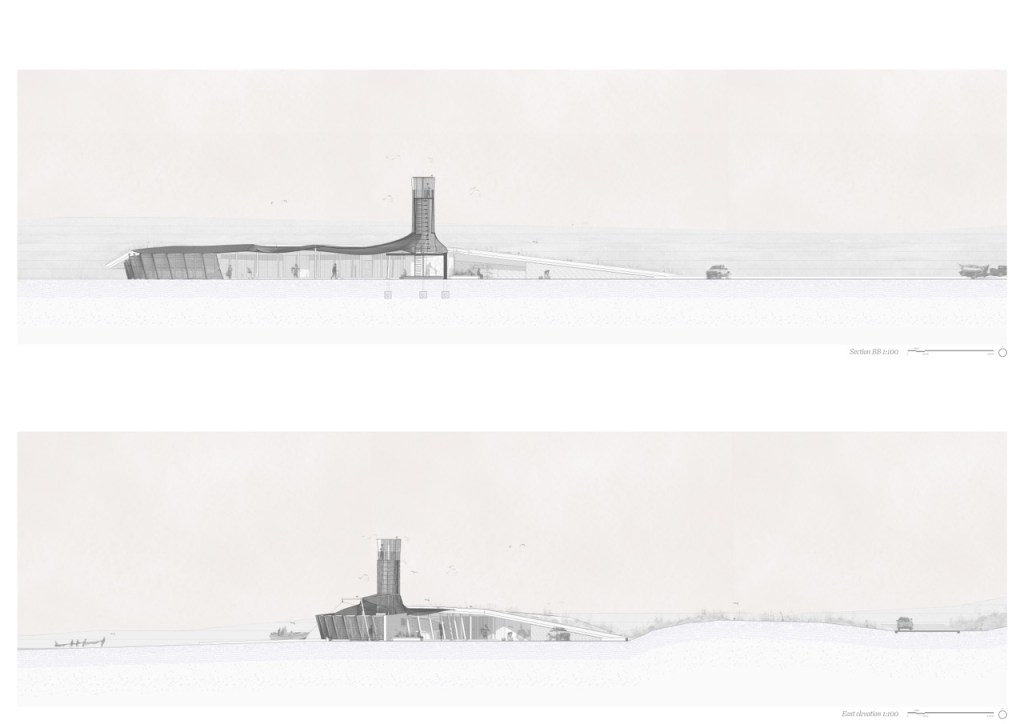
A dune-integrated concrete structure anchors the site, while an adaptable façade of reclaimed fishing nets filters wind and sand. The structure doubles as habitat, supporting the regeneration of seagull roosting spaces and reinforcing a coexistence that was already, quietly, underway.
Repair, here, is not about imposing order. It is about recognition. About safety. About coexistence. About nurturing what already exists.
 repairative architectures