What would it mean to design not just for safety — but for trust?
This project explores how architecture can repair fractured conditions of trust in public space, approaching repair as reimagination rather than restoration — a redressing of imbalance, not a reconstruction of ideals that never really existed.
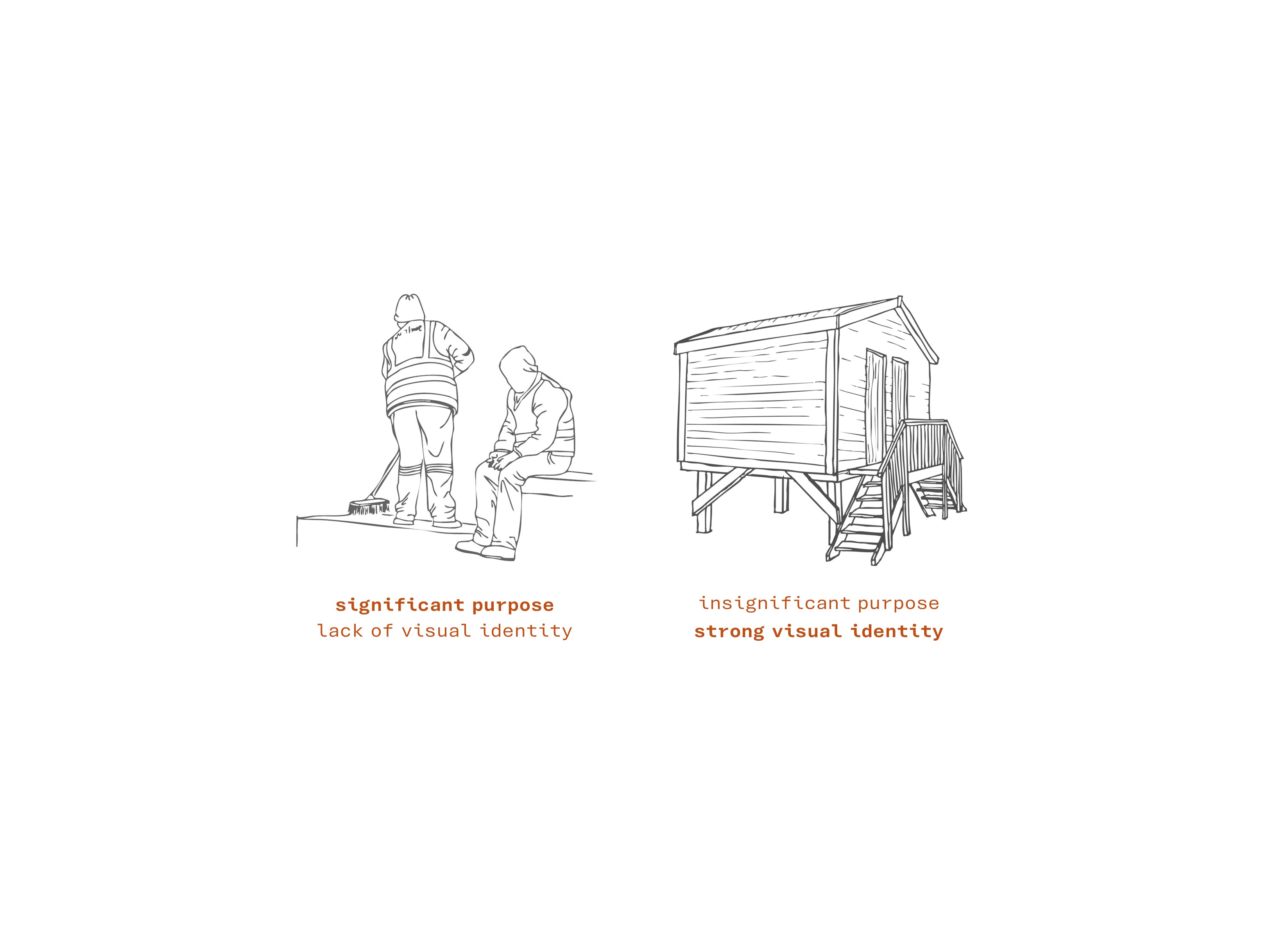
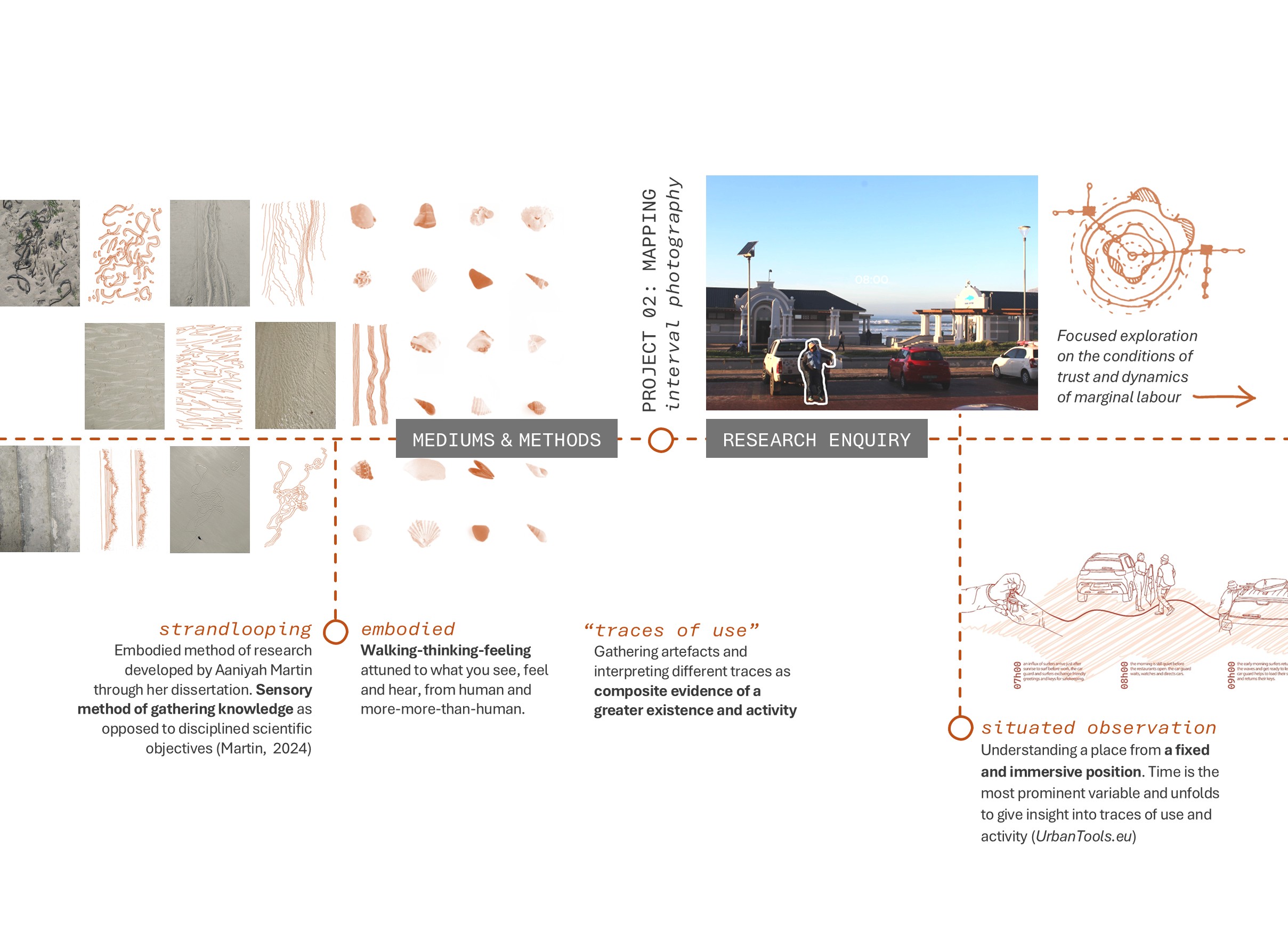
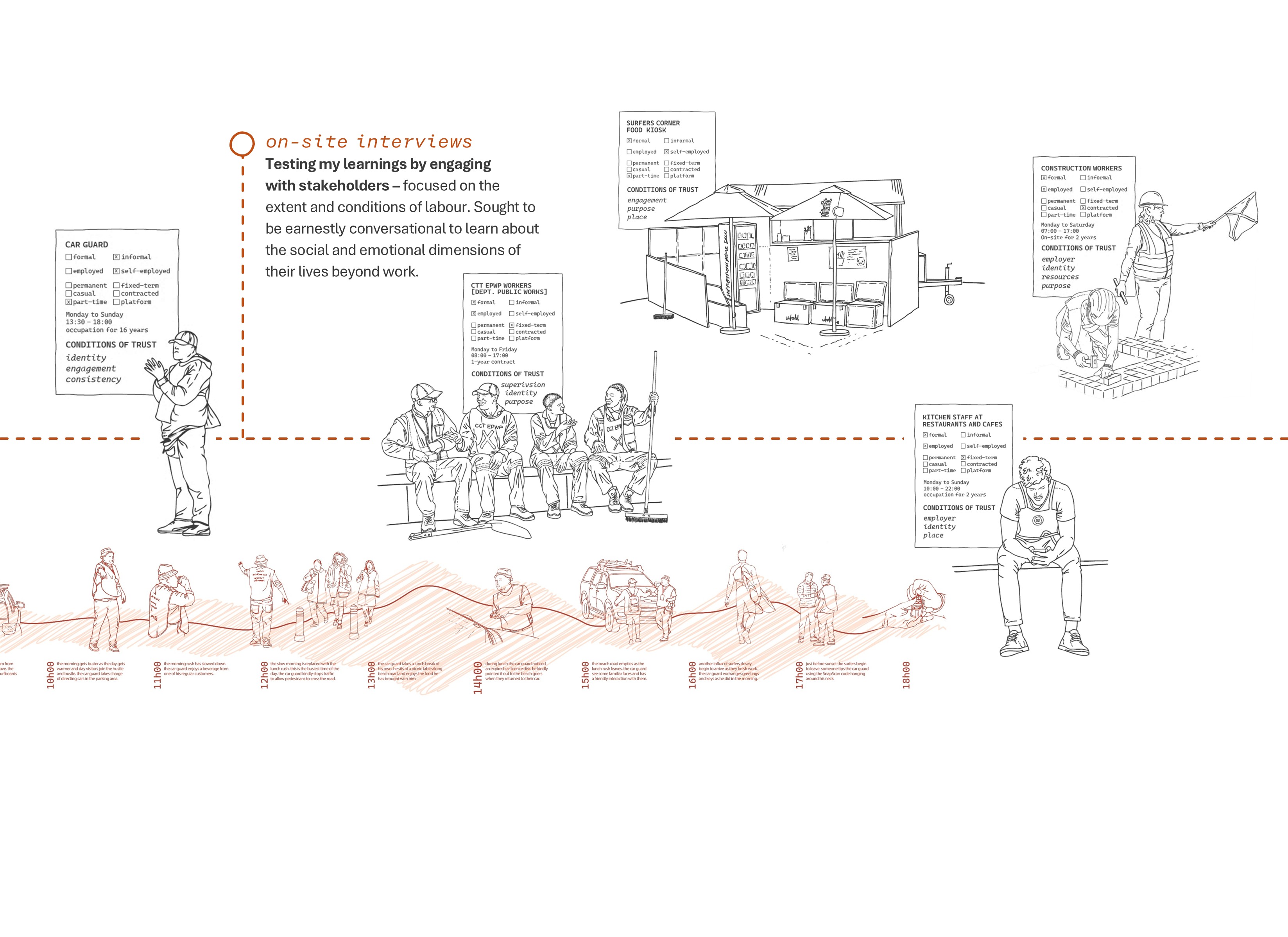
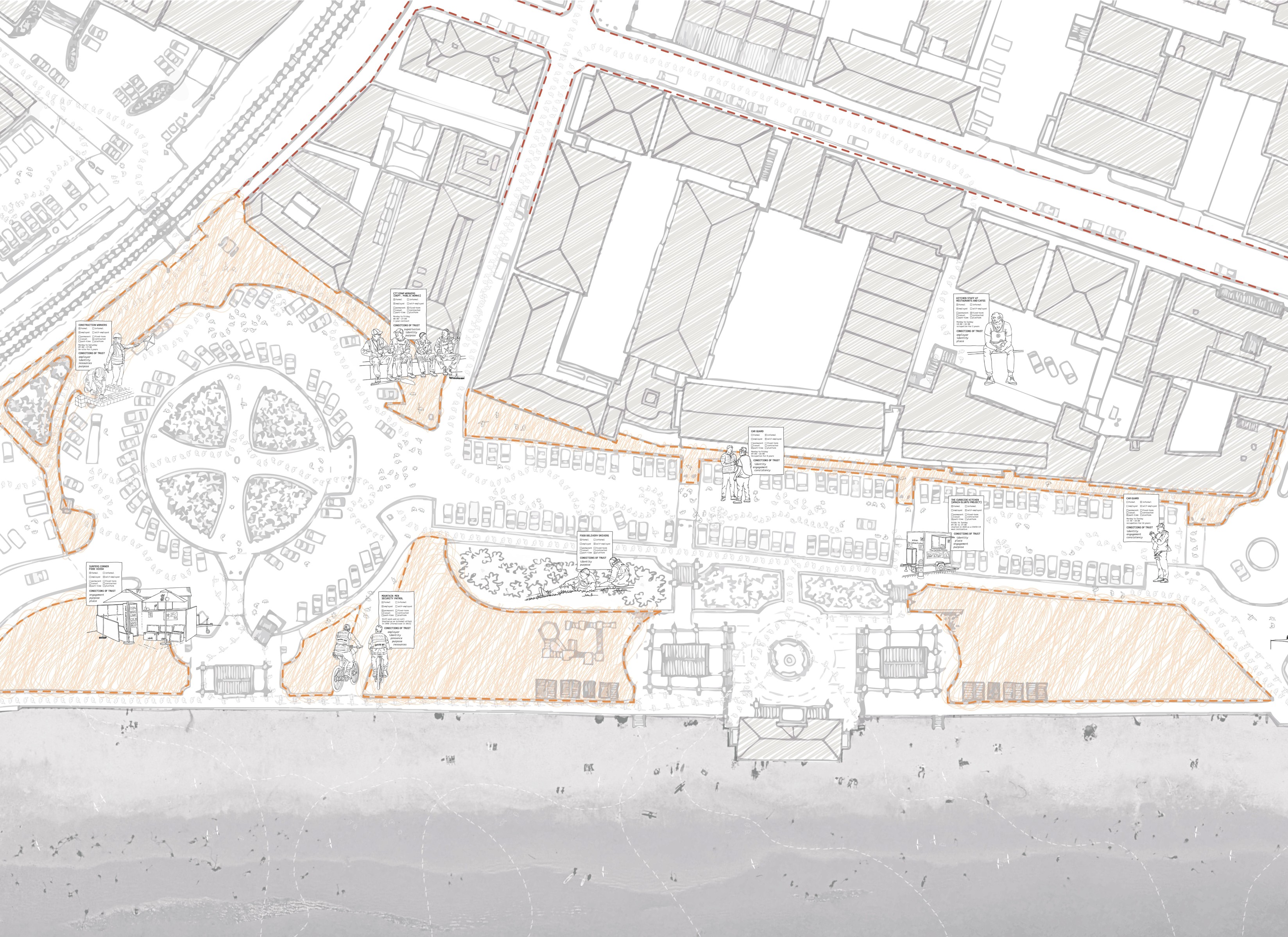
Situated in Muizenberg, it responds to the informal and marginal labour that sustains the beachfront’s socio-economic life, yet goes largely unacknowledged by it. Through embodied research, the project traces how car guards, vendors, cleaners, fishers, and informal workers rely on the public realm for both livelihood and rest — while navigating an environment built to privilege leisure and commercial recreation over any real civic inclusion.
The beachfront works because of this intangible human capital. But it rarely works for them.
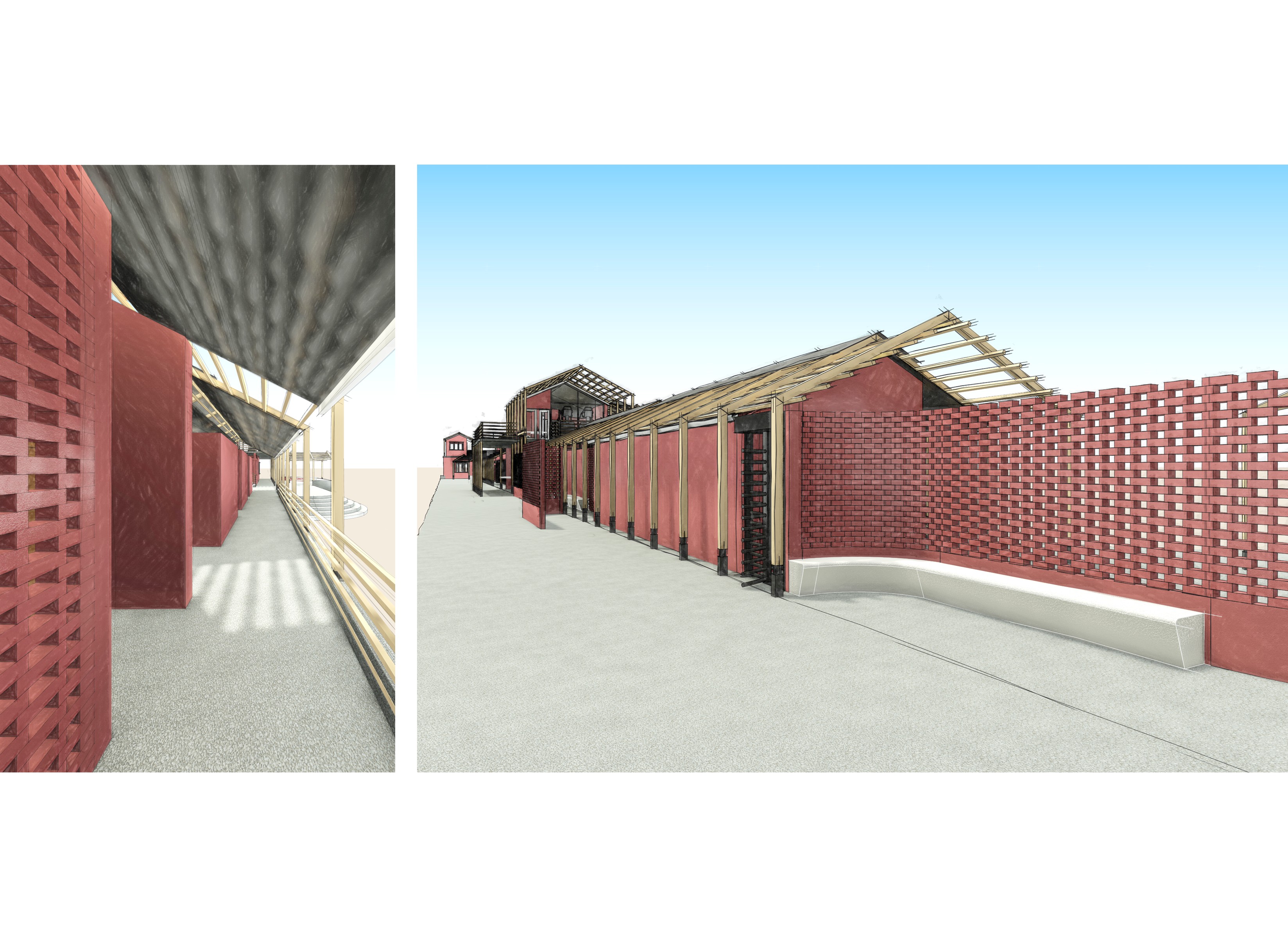
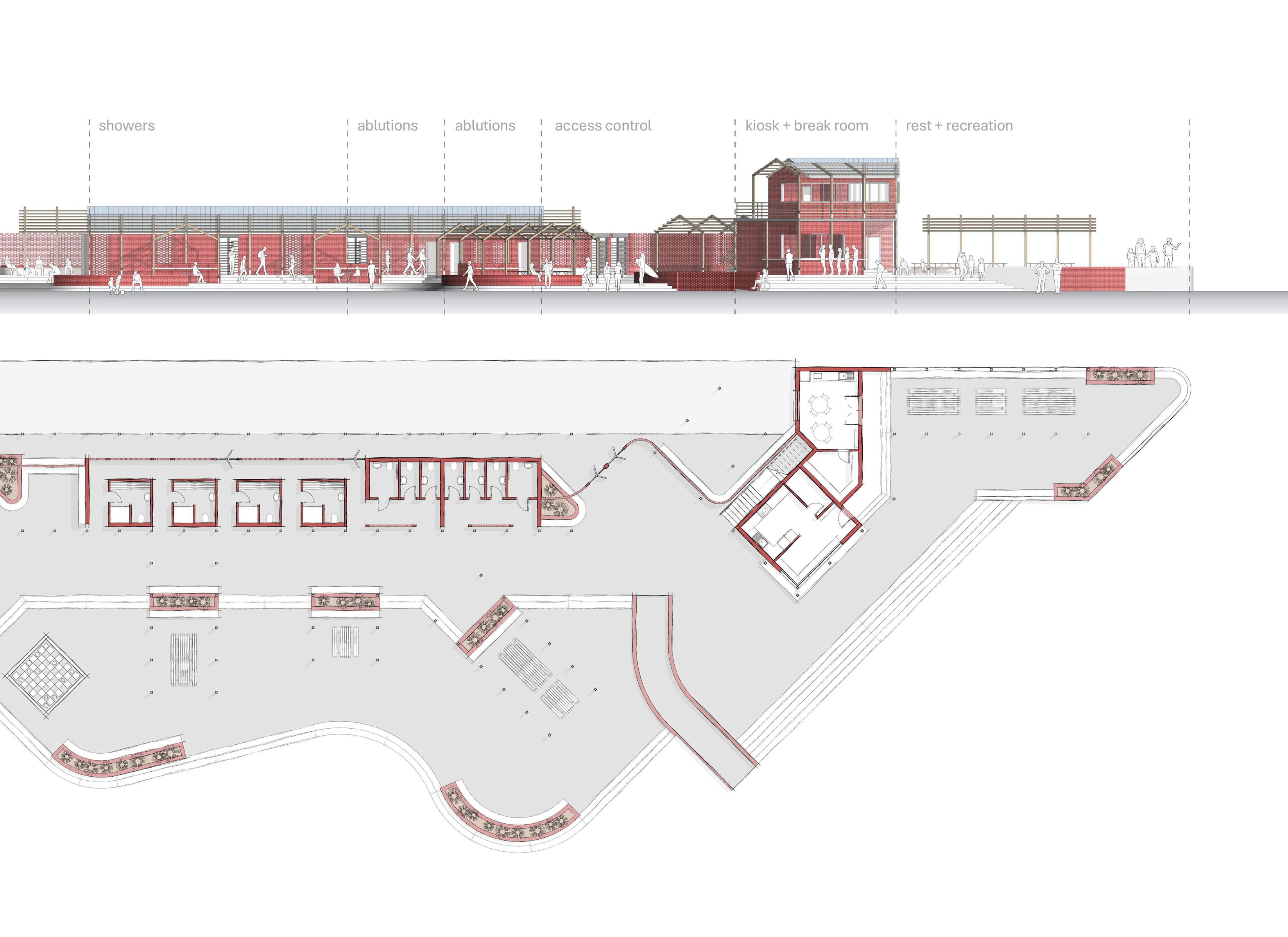
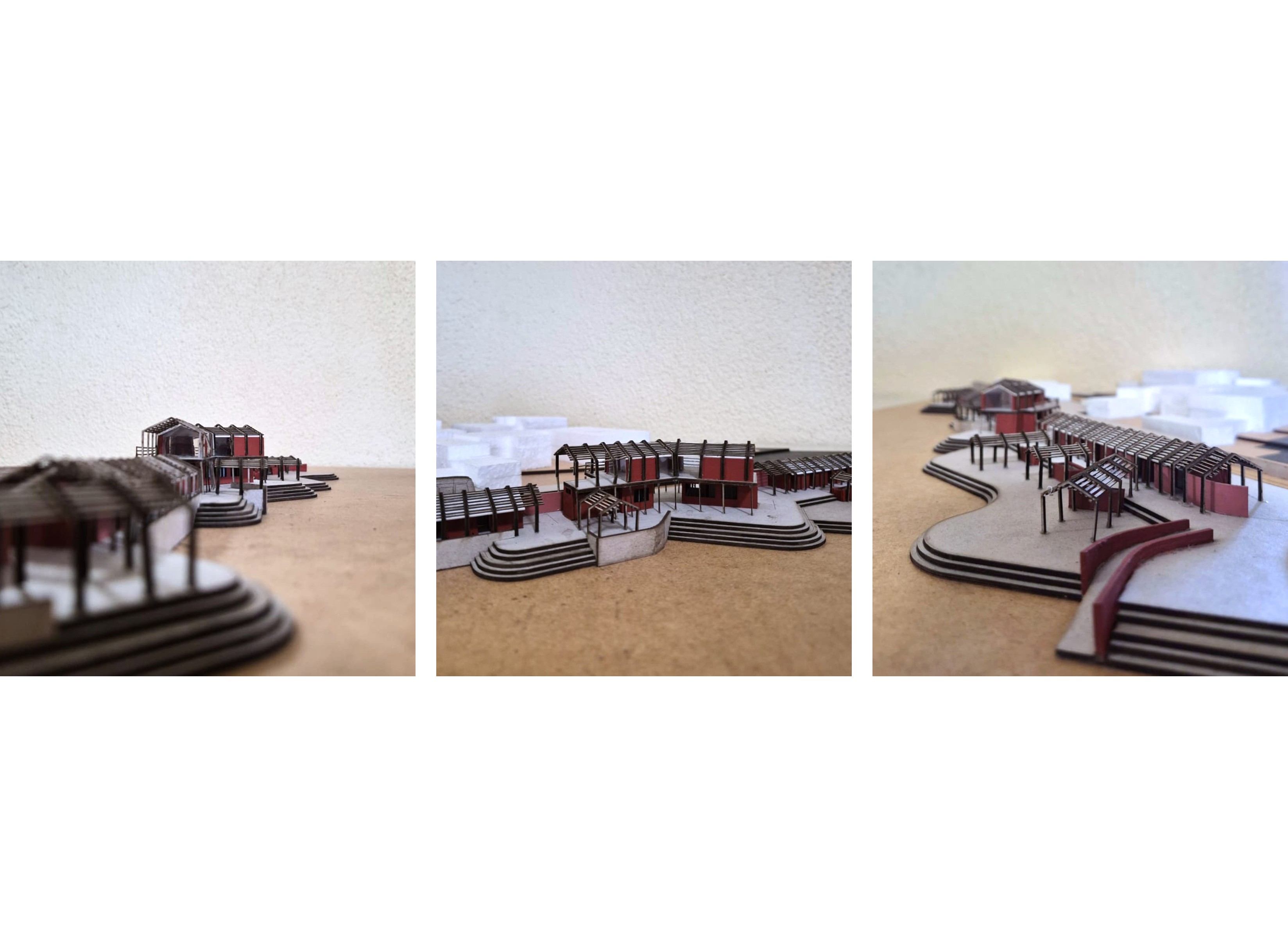
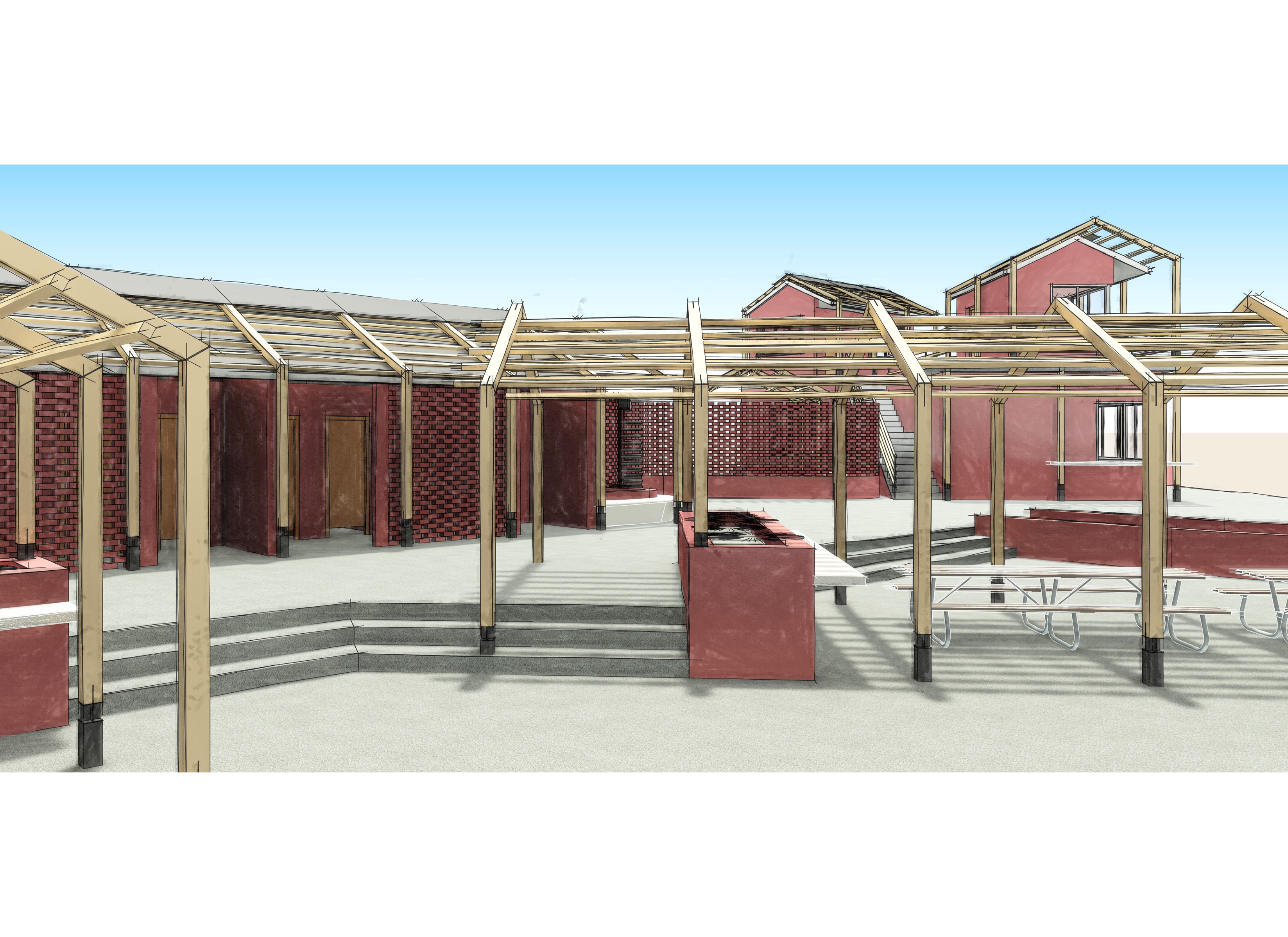
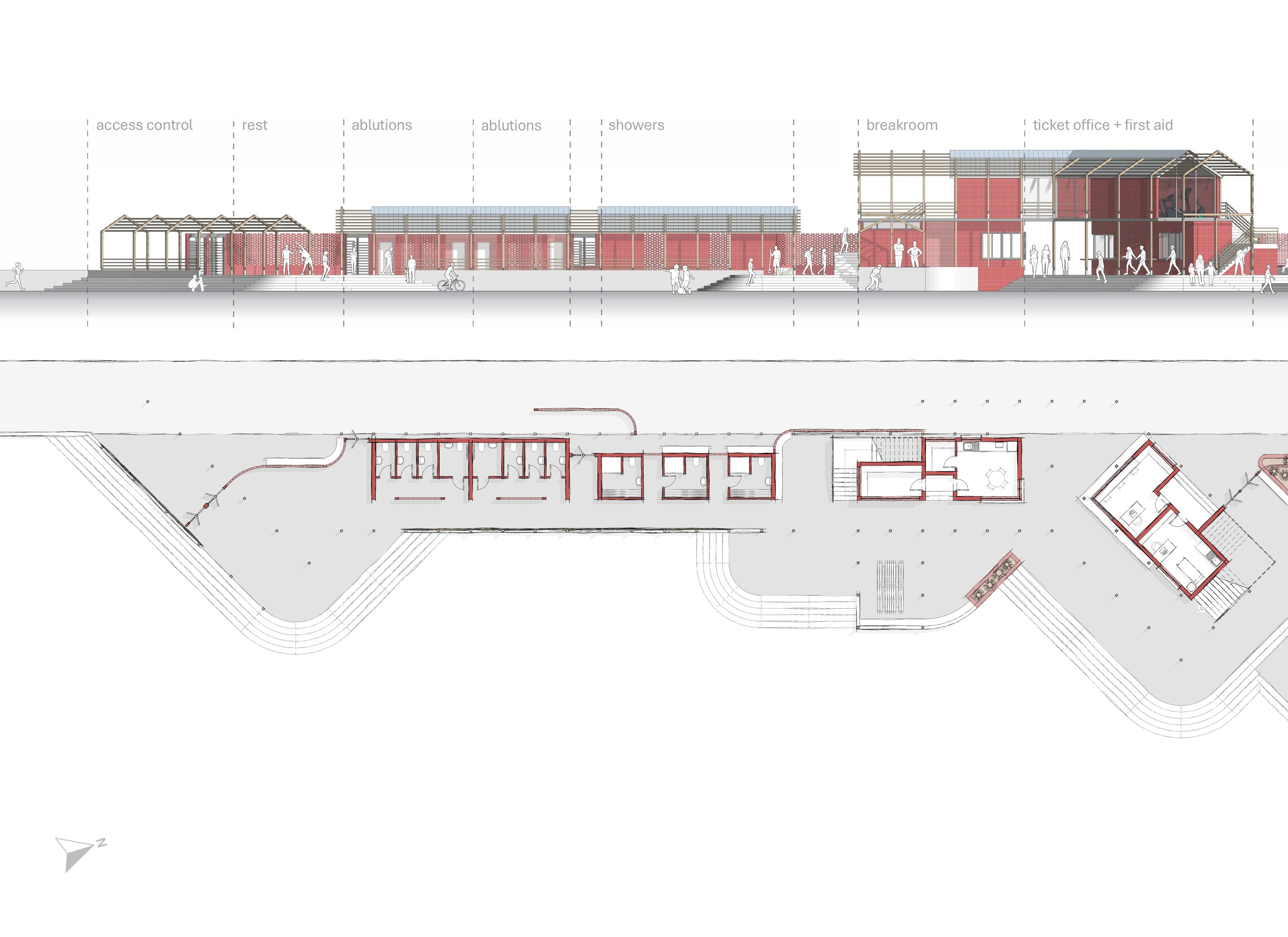
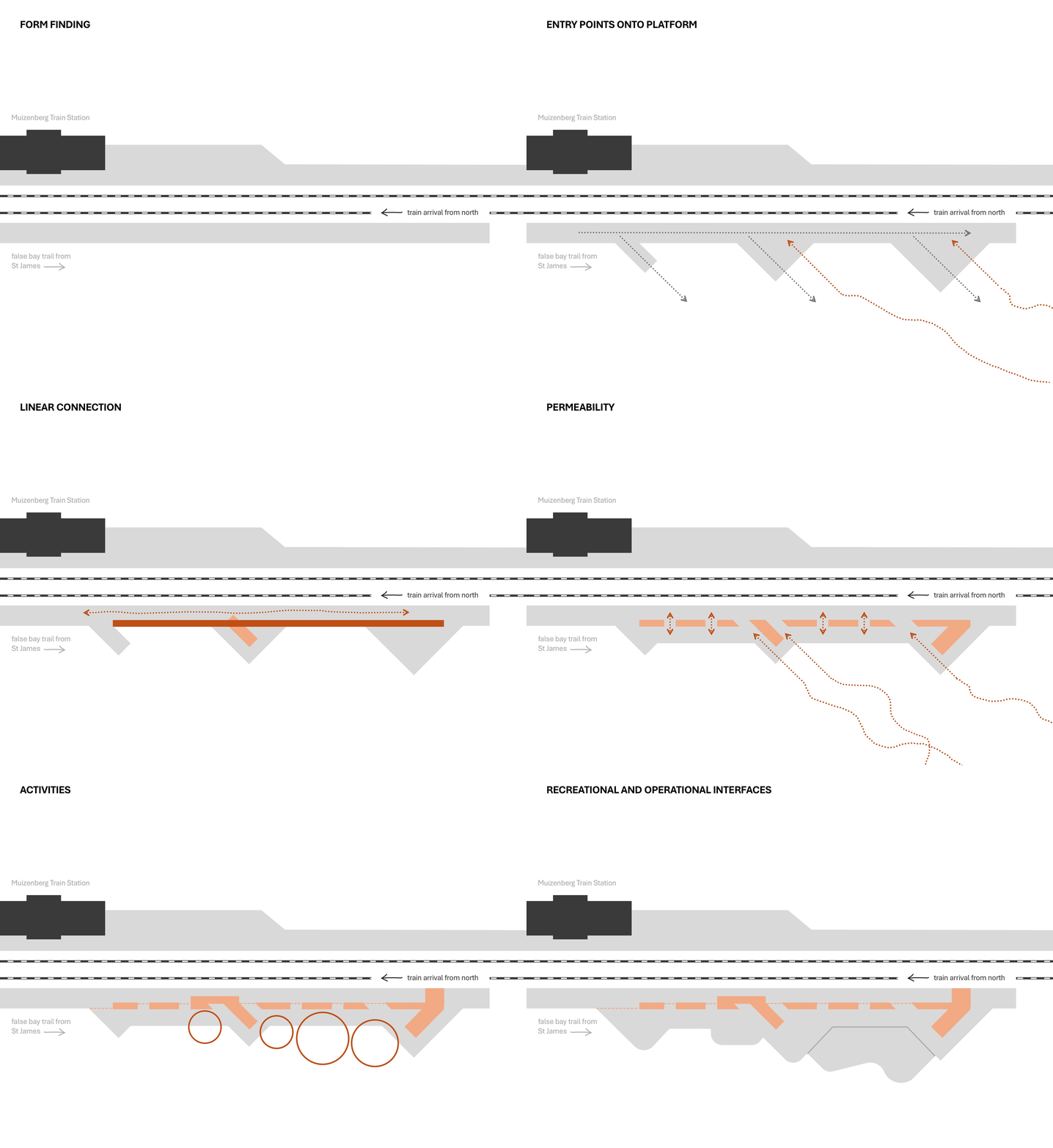
Informed by spatial precedents such as VPUU’s “active boxes,” the proposal reinterprets the iconic visual language of the Muizenberg beach huts as dignified support infrastructure for labour. Anchored as a linear building along the train platform — the intersection where labour and recreation already meet — the intervention integrates:
- ablutions
- break rooms and sheltered rest spaces
- secure storage
- micro-employment kiosks
- spaces of passive surveillance and care
Rather than hiding labour, the architecture makes it visible. Rather than policing space, it enables exchange. Rather than enclosing, it creates permeability.
The project takes seriously architecture’s responsibility in shaping public culture — fostering civic appreciation, visibility, and everyday reciprocity between those who serve the space and those who enjoy it.
Repair, here, is not nostalgia. It is the rebuilding of trust. An infrastructure of dignity. Spaces that recognise the workers already holding the coastline together.
 repairative architectures