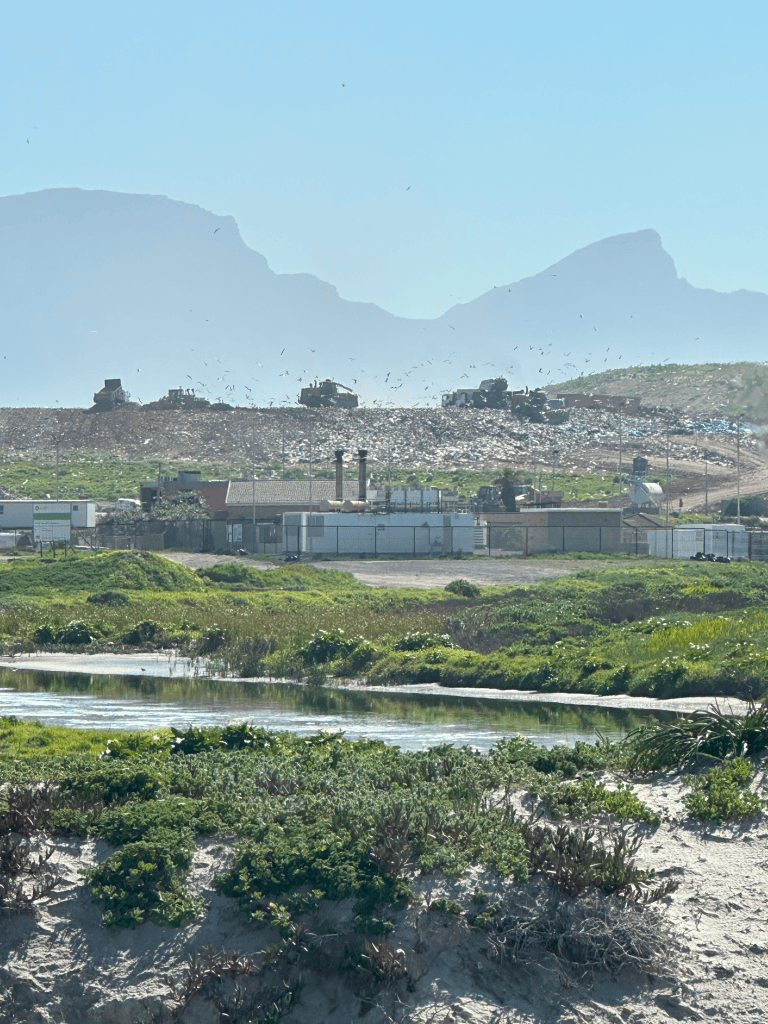
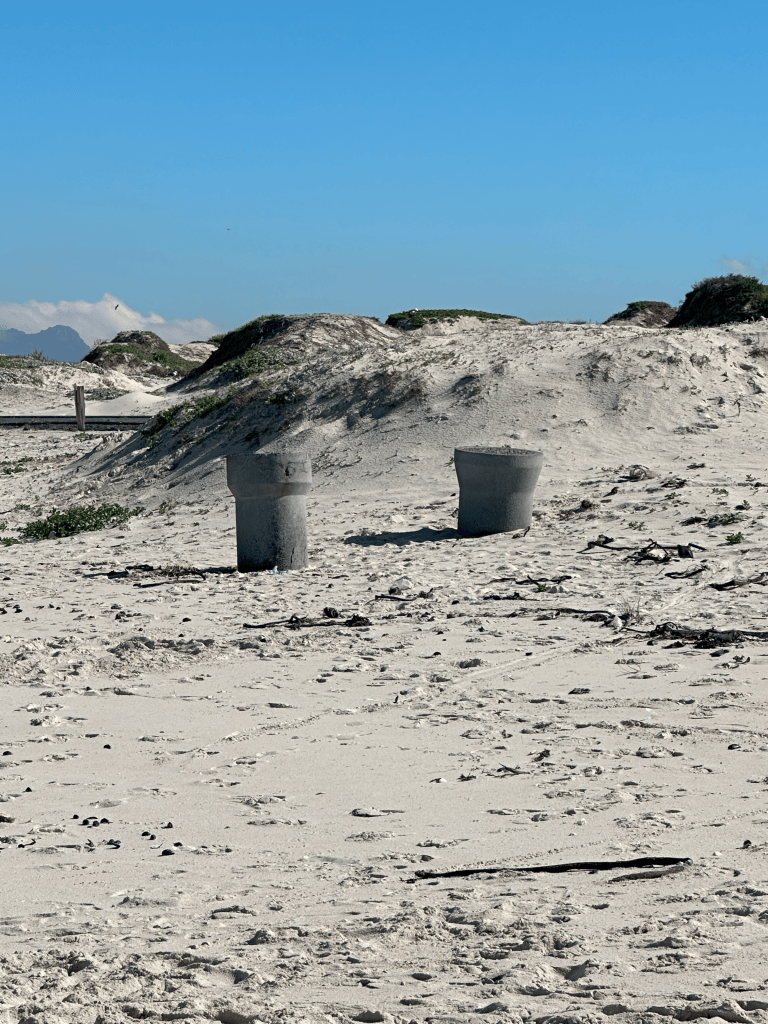
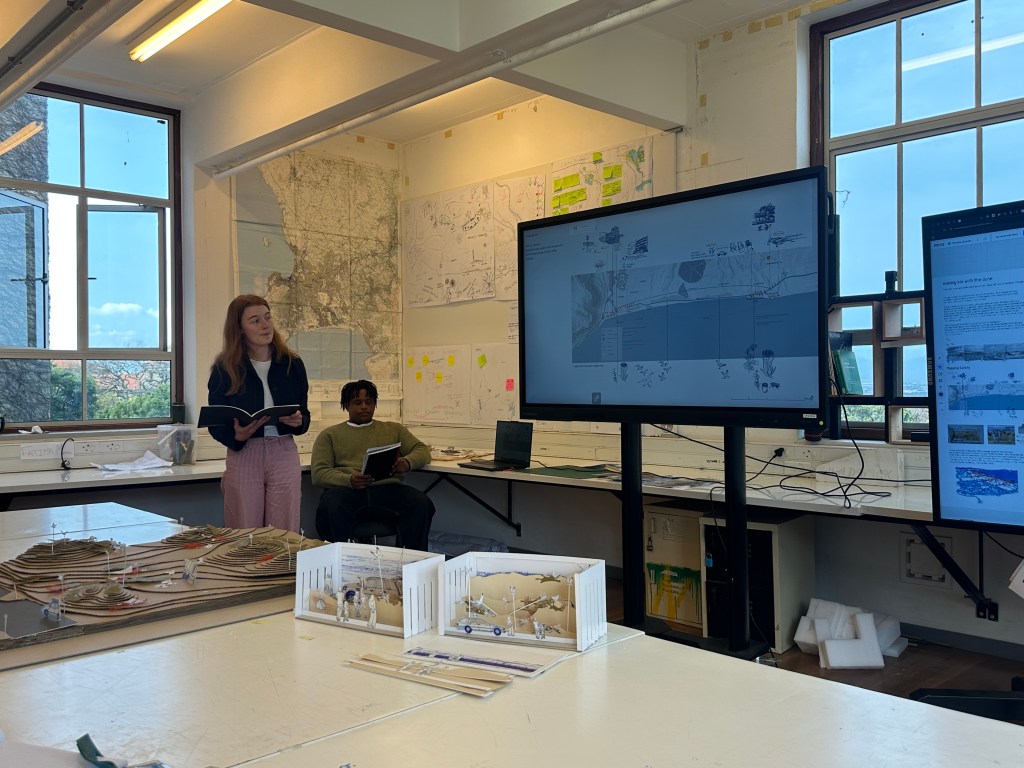
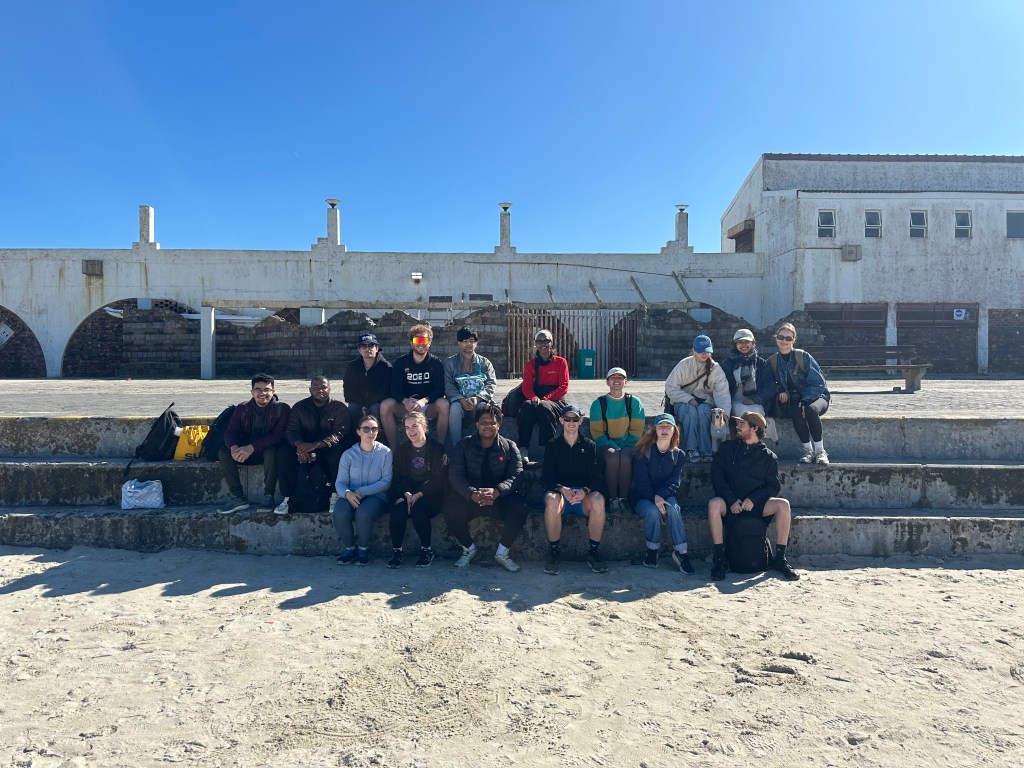
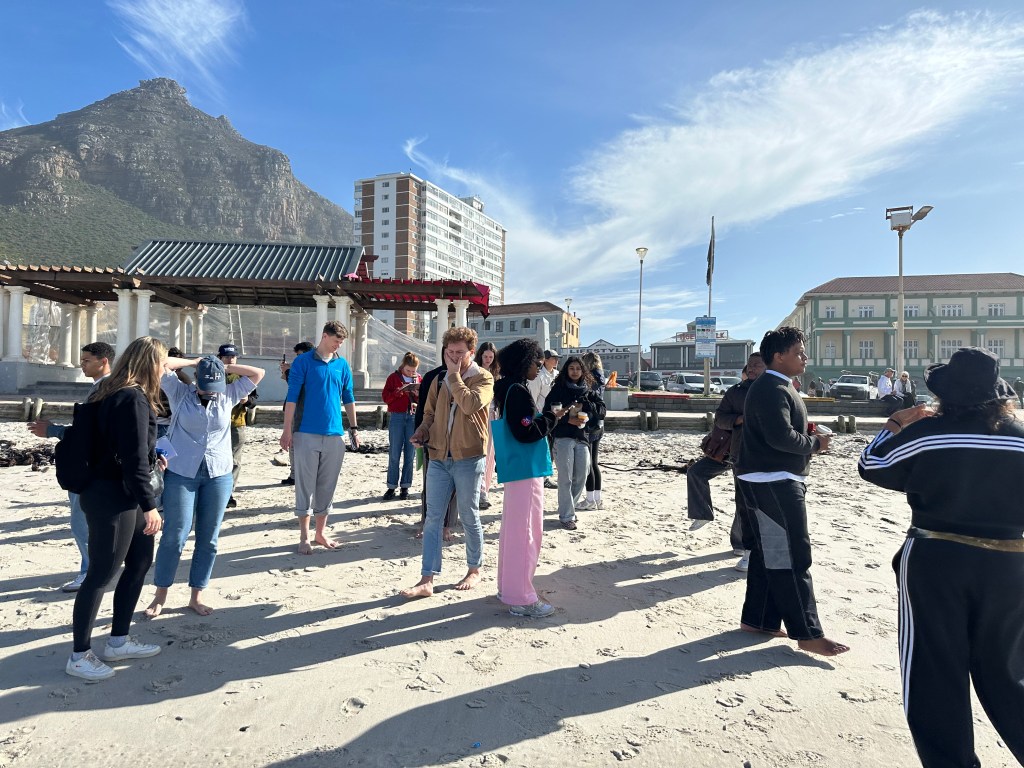
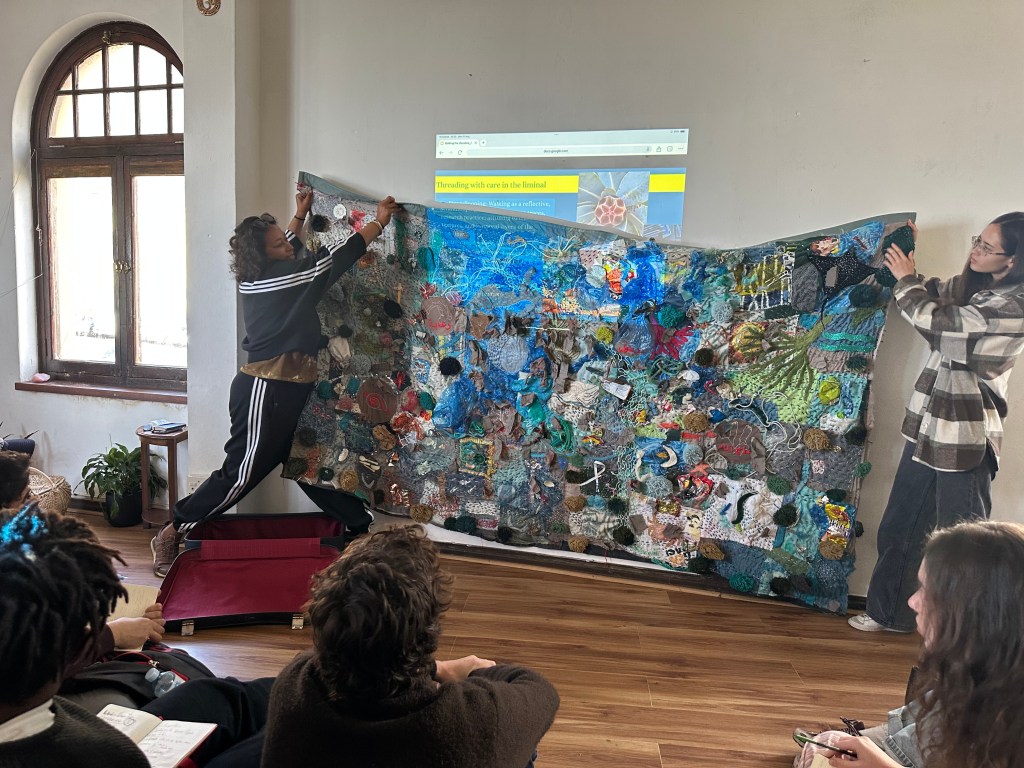
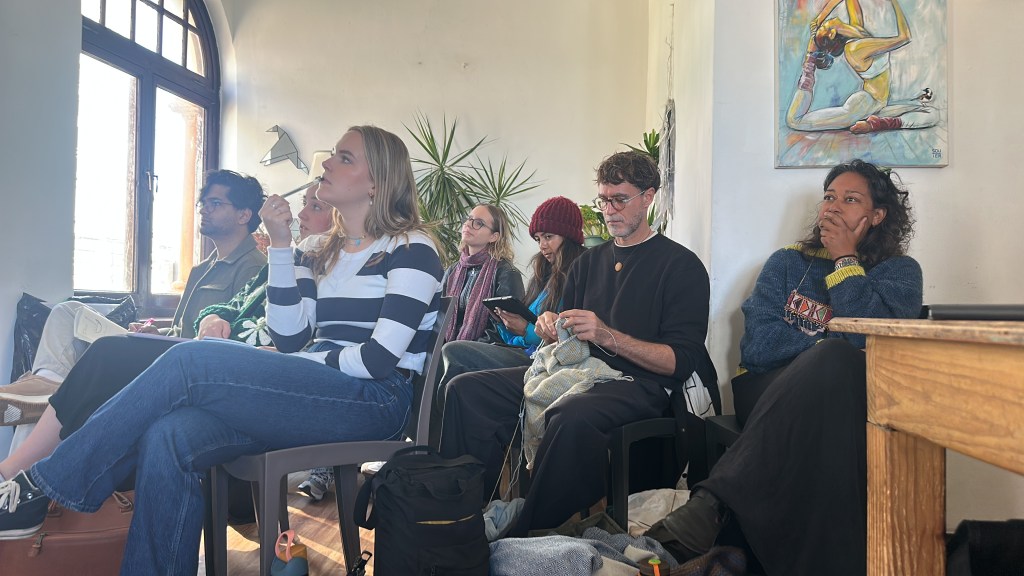
The first iteration of Coastal Architectures of False Bay took the stretch of coastline between Muizenberg and the Strandfontein Pavilion as its site of inquiry. Situated within the wider Repairative Architectures platform, the 2025 studio invited students to explore what repair might mean when approached relationally: not as a technical fix applied to a damaged place, but as a set of practices, relationships, and responsibilities that are already present, and often contested, along the coast.
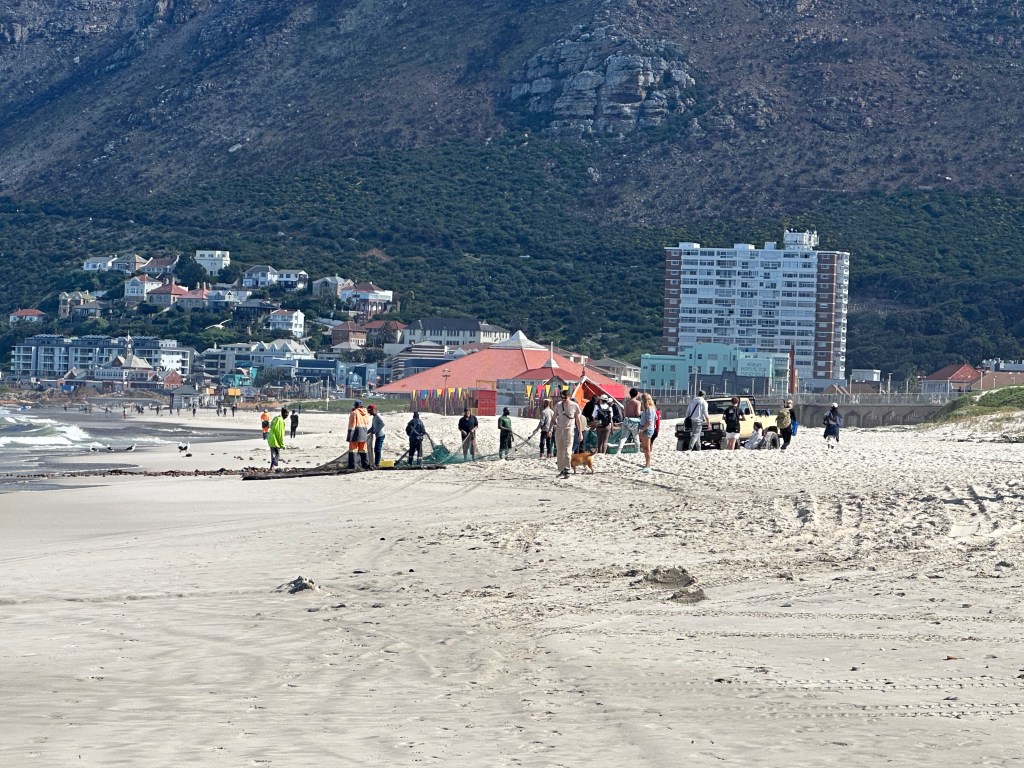
This section of False Bay holds many entanglements. Beaches, dunes, tidal pools, wetlands, fishing grounds, roads, and public facilities sit alongside histories of forced removal and exclusion, everyday practices of fishing, trading, and recreation, and the ongoing, often invisible labour of maintaining coastal space. The studio began from the position that meaningful repair starts with close observation, critical analysis, and reflective positionality, asking students to listen carefully and engage with local conditions before proposing any intervention.
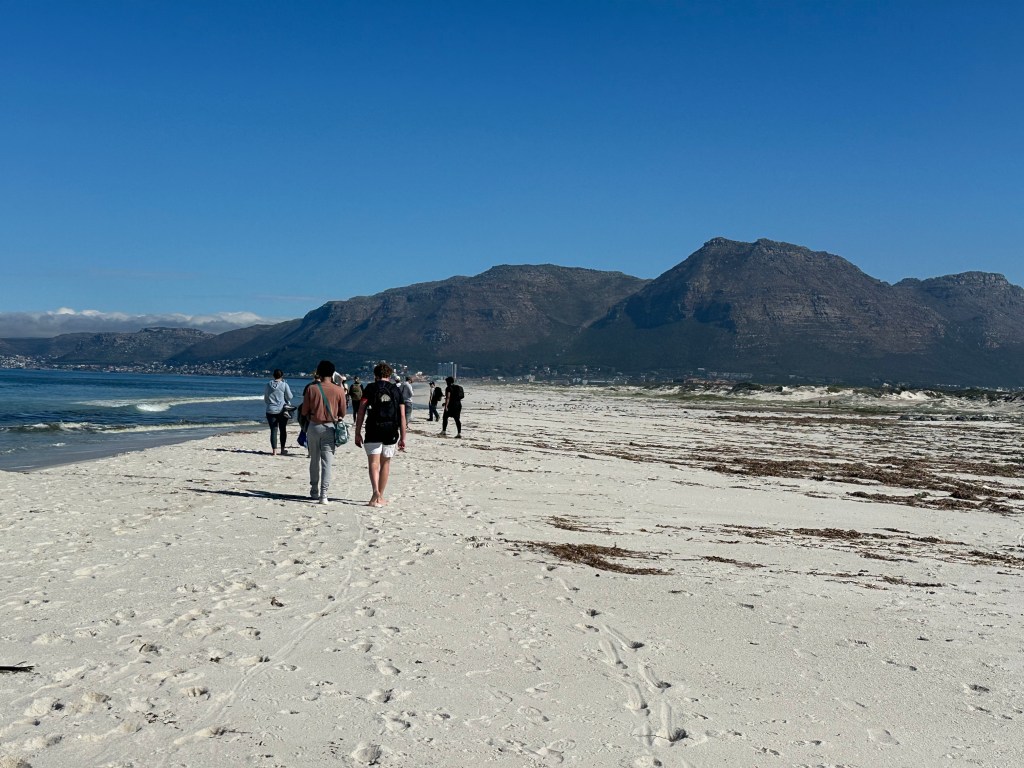
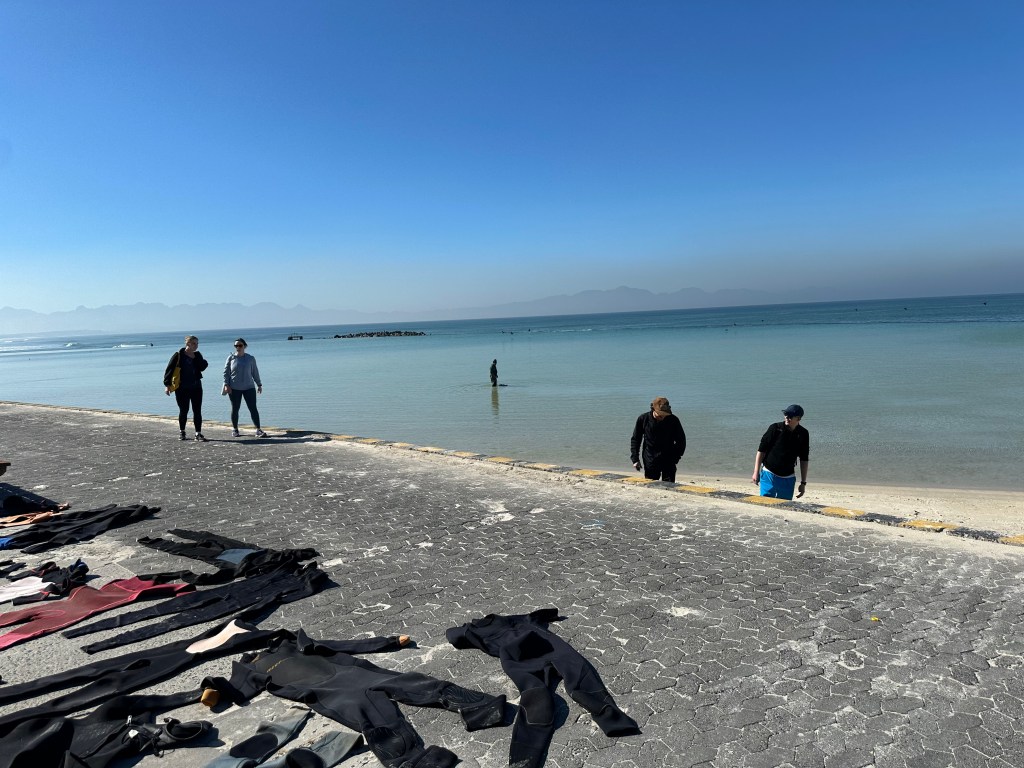
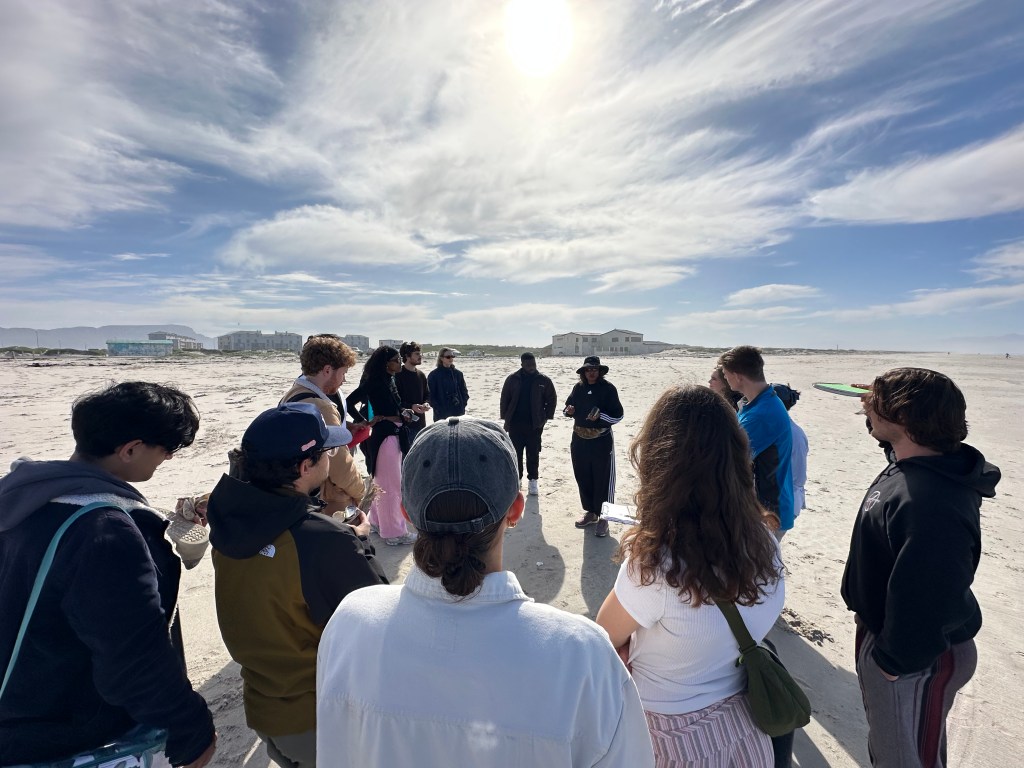
The semester opened with a strandloop, a walk along the shoreline from Strandfontein to Muizenberg, drawing on the strandlooping practice developed by Aaniyah Martin in her work on care for the hydrocommons. Moving on foot allowed students to attune themselves to the physical, historical, and everyday rhythms of the coast, and to notice how access, safety, use, and belonging shift along its length. The walk became the first layer of a sensorial and observational mapping practice that shaped the rest of the semester.
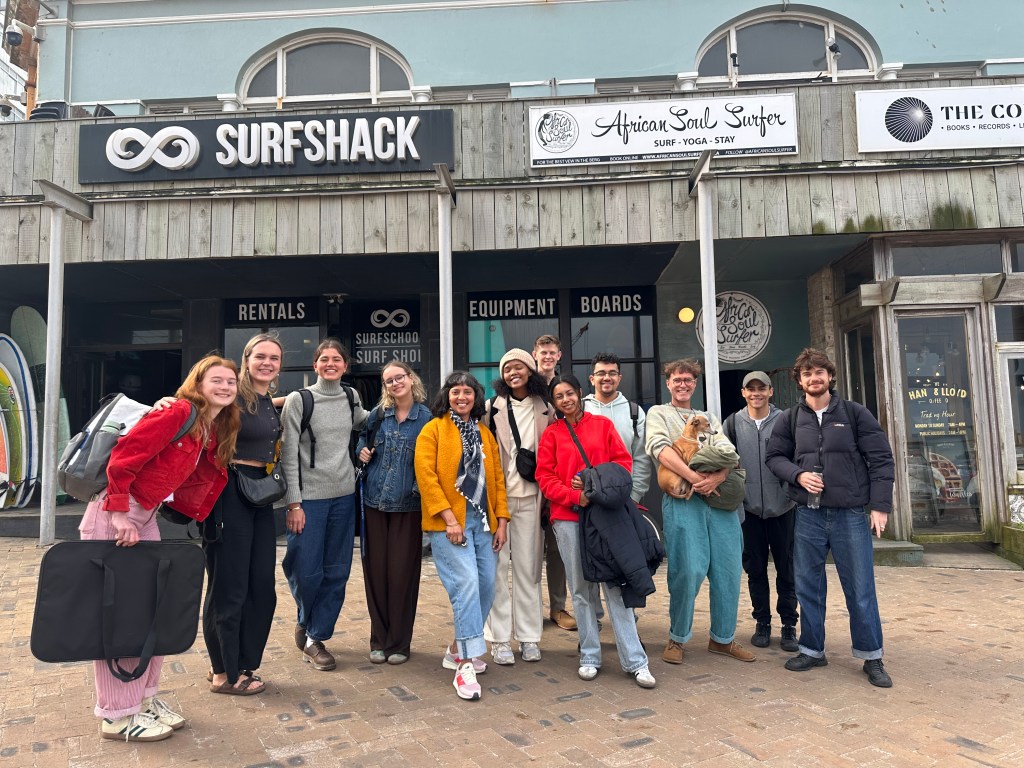
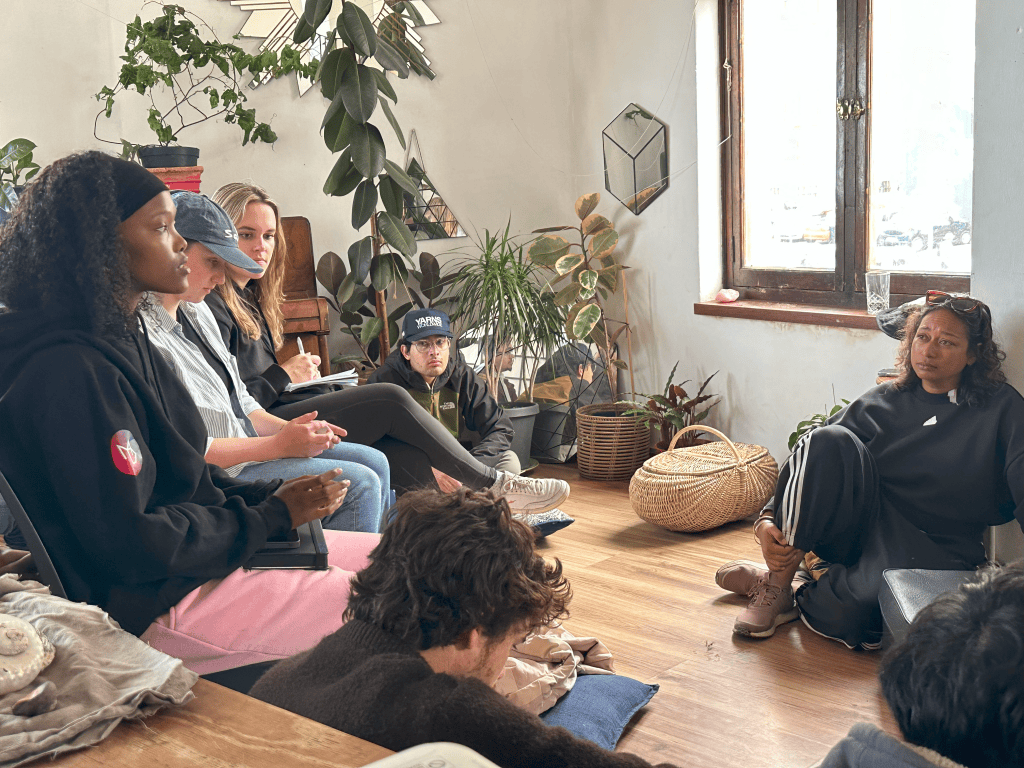
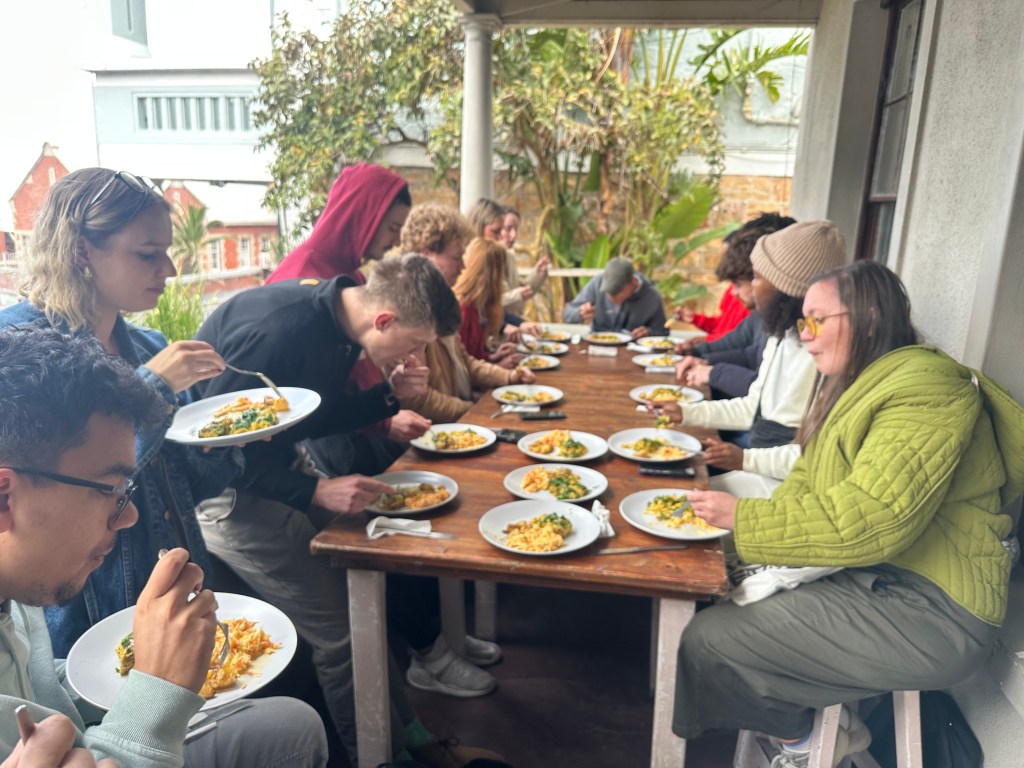
Hosted by The Commons in Muizenberg, the studio then unfolded through a series of iterative workshops and explorations. Students were joined by Aaniyah Martin, Joanne Peers, and Dylan McGarry, whose inputs helped open up questions of coastal knowledge, heritage, ecological relationships, and embodied and creative ways of working with place. These conversations encouraged students to consider who is invited to participate in coastal care and decision-making, who has been excluded, and how historically marginalised communities have shaped, and continue to shape, more inclusive coastal futures.
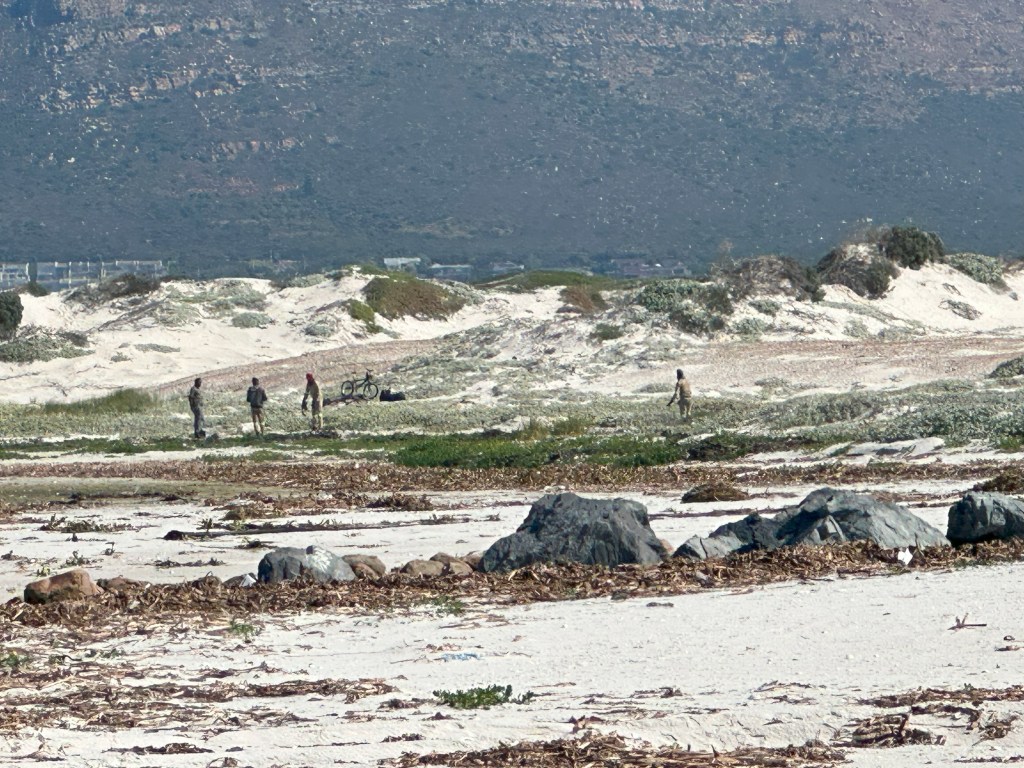
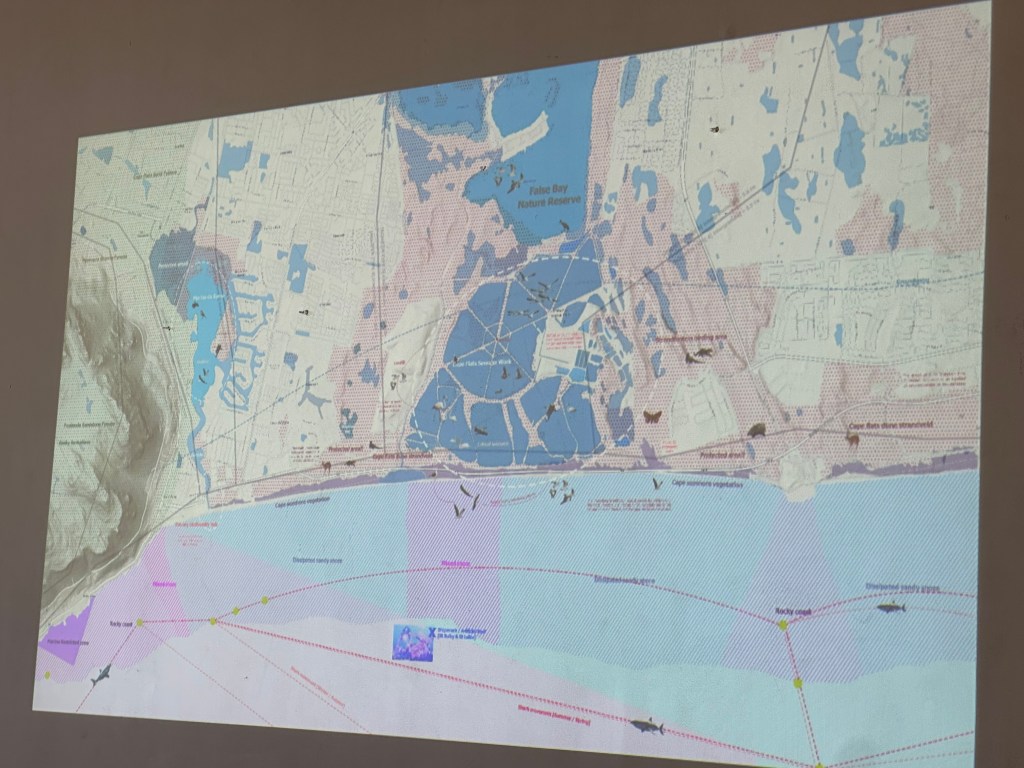
Students worked across four thematic groups: fishing, food, and ocean practices; markets and informal economies; ecologies and nonhuman perspectives; and safety, pause, and social interfaces. Through fieldwork, interviews, stakeholder mapping, and techniques drawn from marine spatial planning, each group traced how rights, governance, and power are spatialised along the shoreline, and where care, maintenance, and repair are already taking place.
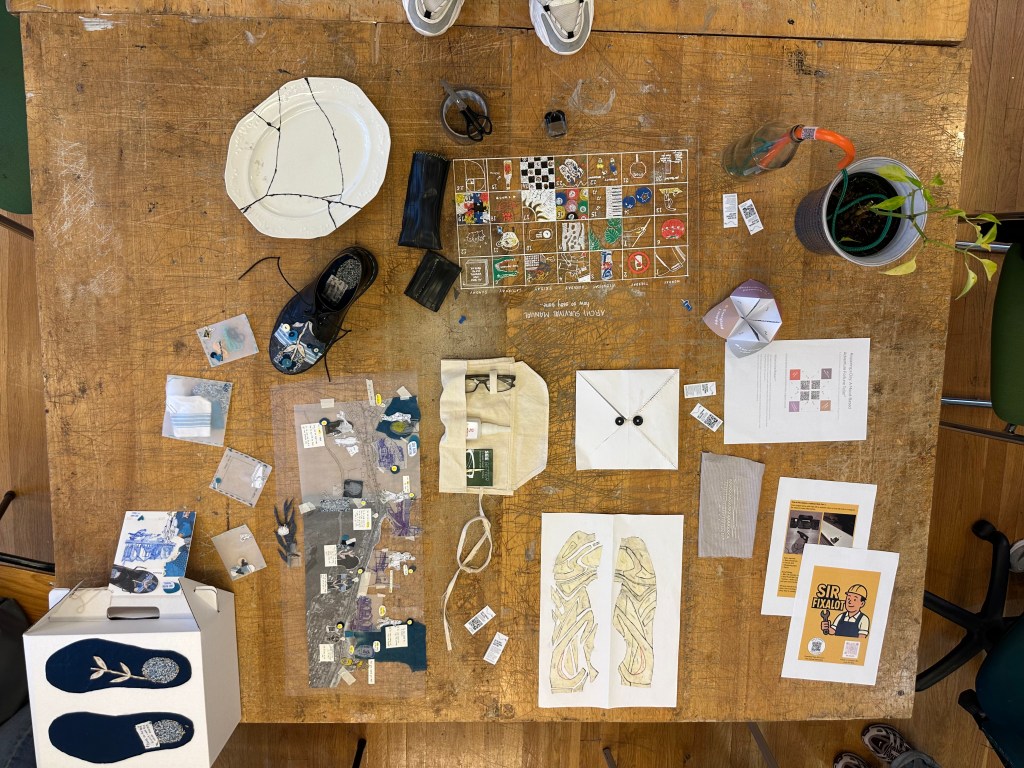
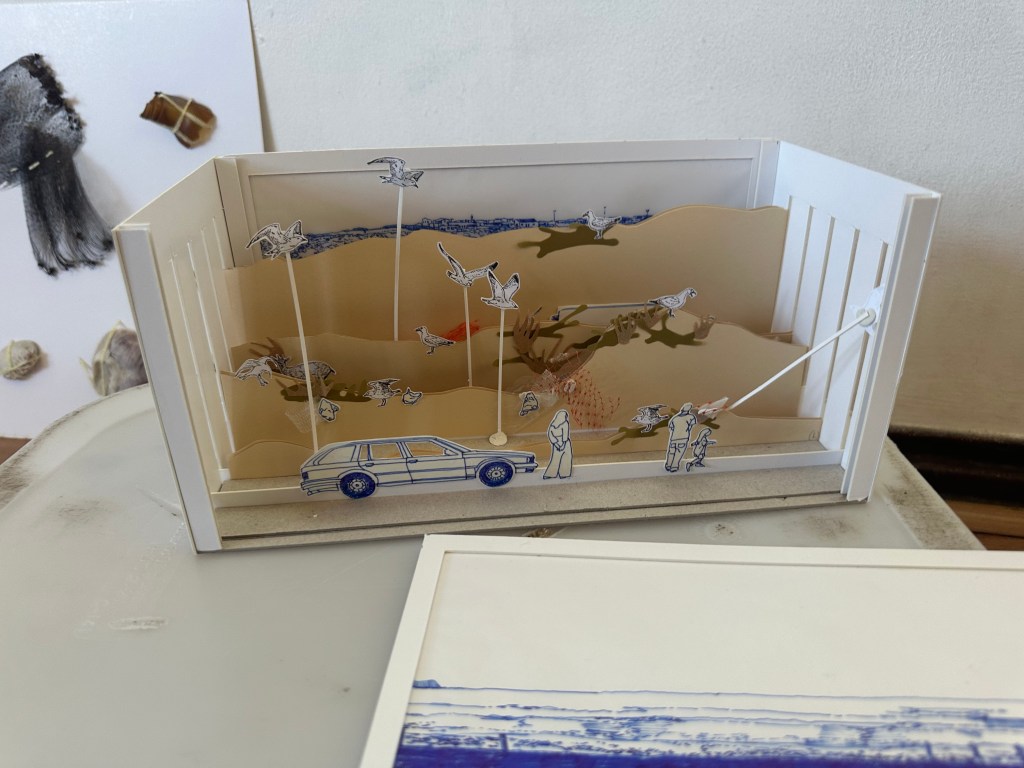
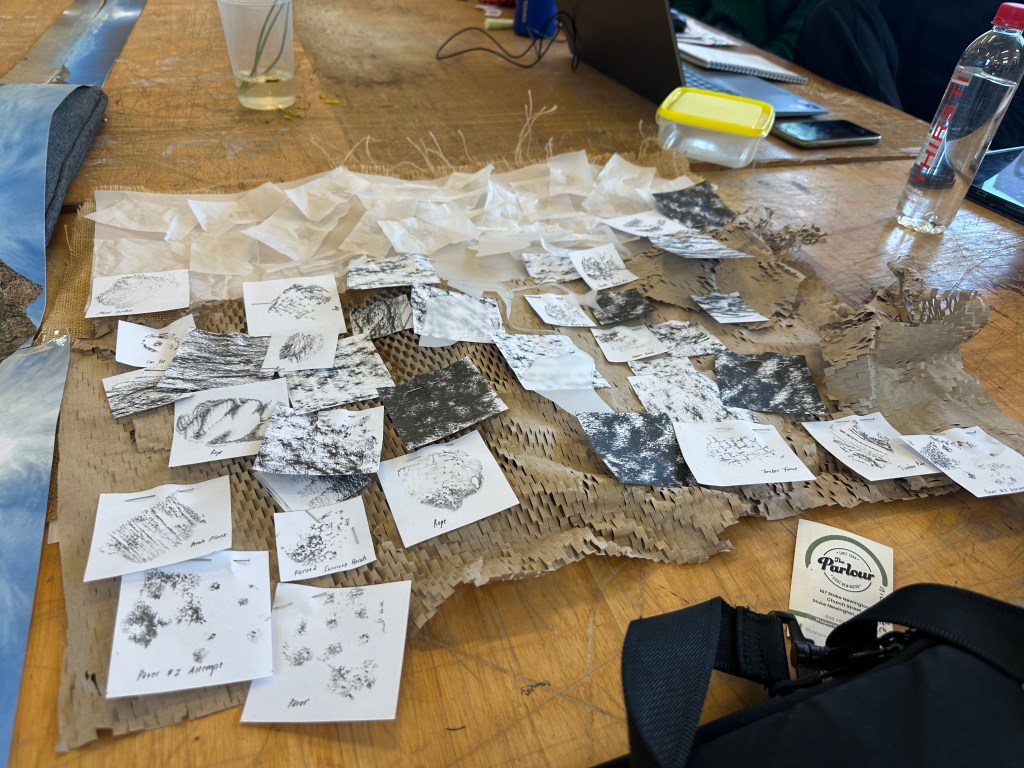
These investigations were developed into repair manuals, used as design research tools to document the interplay between ecological and built infrastructures and to surface the labour, meanings, and histories inscribed in the coastal landscape. The manuals, in turn, grounded a series of site-responsive repair artefacts and architectural propositions.
As the first iteration of a longer, multi-year inquiry, the Muizenberg to Strandfontein studio laid the groundwork for a shared, growing body of knowledge about False Bay. Subsequent iterations extend this work to other parts of the bay, including Kalk Bay and the stretch from Monwabisi to Mnandi, each adding a situated perspective to a wider understanding of the bay as an interconnected and uneven coastal territory.
Students
- Adrian Boyce
- Bea Leibenberg
- Daniel Marx
- Jenna Bramley
- Josie Middleton
- Julia Chamberlain
- Kezia Taylor
- Khanyisile Bodlani
- Liam Brien
- Liam Lineveldt
- Lungiswa Sibisi
- Megan Nicholson
- Milan Prioreschi
- Raees Harneker
- Taahir Sardiwala
- Thaafier Gasant
- Thalia Coetzee
- Thamsa Donald